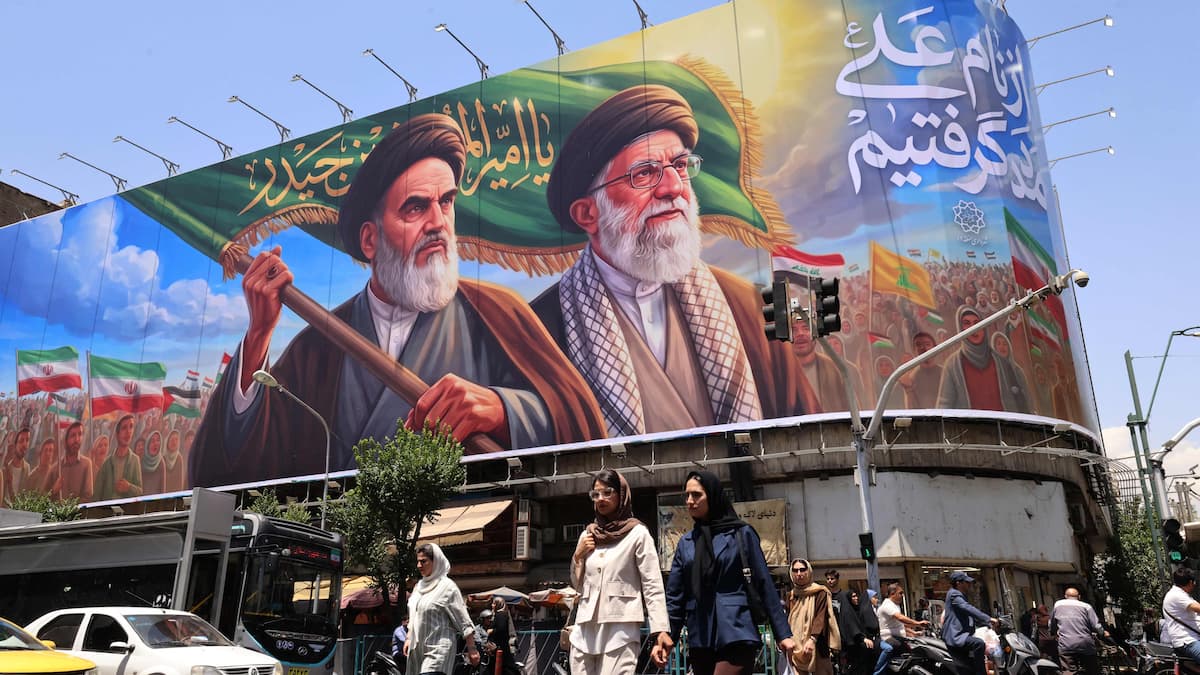

Hostilities between Iran and Israel are currently at a standstill, after reciprocal strikes between the two countries for the first time since the truce concluded two months ago, each however threatening to respond with force to possible new attacks.
• Also read: LIVE | 101st day of war in the Middle East: Iran announces a “cessation” of its strikes against Israel
• Also read: Israeli strikes on Iran: Netanyahu’s risky gamble against Trump
• Also read: “I no longer hope for anything”: in Iran, residents resigned after a resumption of attacks
Iran first announced the end of its military operation against Israel, following a message from Donald Trump urging the two countries to “immediately” cease hostilities.
“At present, hostilities on this front have ceased,” Israeli Prime Minister Benjamin Netanyahu subsequently confirmed.
After 100 days of war and the entry into force on April 8 of a fragile ceasefire, explosions and alerts rang out again in Tehran and Tel Aviv on Sunday and Monday. The attacks left 15 injured in Iran, according to the head of the national emergency organization.
Since Sunday evening, Iran has fired around thirty missiles against Israel according to an Israeli military official, in response to an Israeli strike against the southern suburbs of Beirut, a stronghold of pro-Iranian Hezbollah, in which two people died and 20 were injured.
At midday on Monday, the command of the Iranian armed forces announced “the cessation of the operation”, described as a “severe response” to Israel. But he warned that “in the event of continued aggression and hostilities, including in southern Lebanon, much more severe and repressive actions than before will be taken.”
“With force”
“We have broken the equation of concluding a ceasefire on paper and systematically violating it on the ground,” commented Iran’s chief negotiator, Parliament Speaker Mohammad Bagher Ghalibaf.
In the same tone, Israeli Prime Minister Benjamin Netanyahu assured that his country would respond “with force” to any new Iranian attack.
The one who ordered strikes against Iran despite the American president’s objection also told him, “with respect”, that Israel would exercise its right to defend itself “whenever necessary”.
Earlier, Defense Minister Israel Katz said his country “will continue to act” against Hezbollah. He promised that “any Iranian attempt to establish a link between Lebanon and Iran in order to attack Israel will receive a response with great force.”
Tehran insists on dealing with the conflict between Israel and Hezbollah at the same time, and the broader conflict in the Middle East, while the United States wants to deal with the Lebanese issue in a second step.
On the ground, Israeli strikes continued on Monday, notably in Tire in southern Lebanon, where a car was targeted, injuring four rescuers from a nearby Red Cross building.
Hezbollah claimed responsibility for new attacks against Israeli forces in southern Lebanon, but not against Israeli territory. The Israeli army, however, intercepted three projectiles fired from Lebanon on Monday, according to an AFP journalist present at the border between the two countries, on the Israeli side.
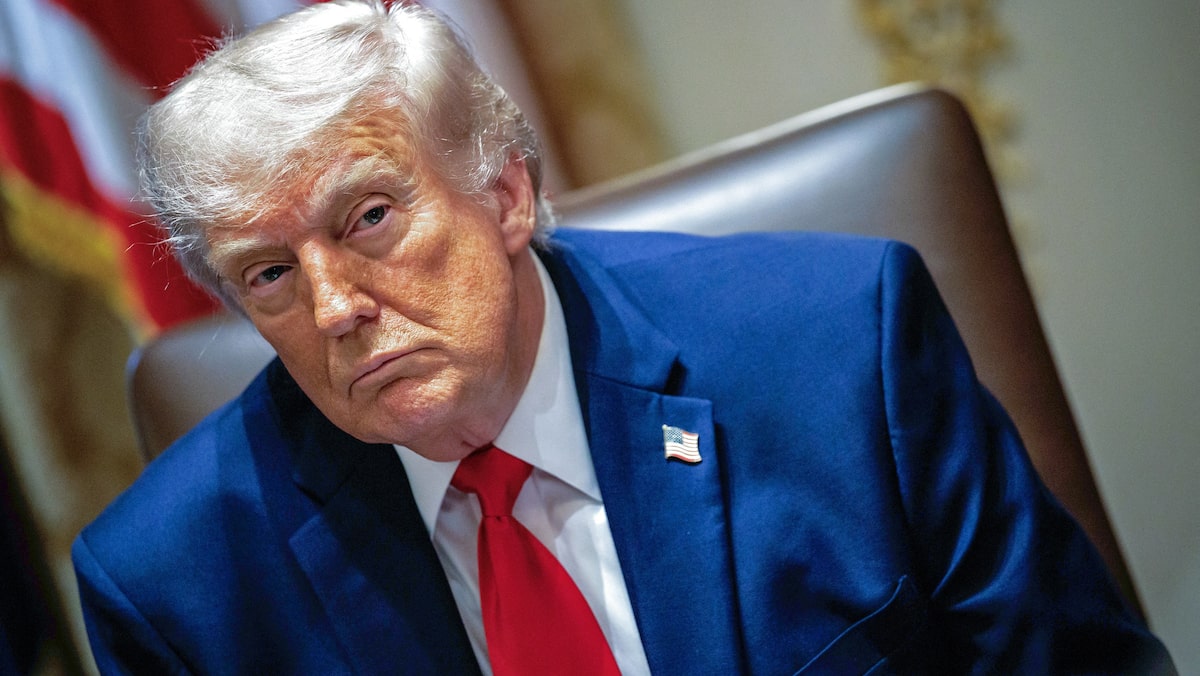
Donald Trump, who has not hidden his disagreements with Israeli Prime Minister Benjamin Netanyahu in recent days, and called him on the phone on Monday according to the White House, banged his fist on the table just before the Iranian announcement.
“Israel and Iran must immediately stop ‘shooting’,” he demanded, seeking a way out of a very unpopular conflict in the United States in the run-up to the mid-term elections.
Return to calm?
A sign of a possible return to calm, Iranian airspace was reopened as a whole on Monday, after the closure of its western part the day before, announced the director of the Civil Aviation Organization, Abouzar Shiroudi, quoted by state television.
In Tehran in the morning, an AFP journalist heard a loud explosion. A few hours earlier, Iranian state television had reported explosions in Tehran, Tabriz (northwest) and Isfahan (center), Israel for its part indicating that it had struck and destroyed defense systems.
This resumption of hostilities will “affect” talks with the United States even if negotiations via the Pakistani mediator continue, Iranian diplomacy assured, which was confirmed by Donald Trump, regretting that the process was slowed down by “ignorance or stupidity”.
Fueling fears of a further extension of the conflict, the Houthi rebels of Yemen, allies of Iran, for their part claimed an attack against Israel from Yemen and decreed a ban on Israeli navigation in the Red Sea, another strategic maritime route.
In this febrile context, oil prices, which have already soared in recent weeks due to the blockage of the Strait of Hormuz, are climbing and European stock markets are moving cautiously.