
Lacking fuel due to the American oil blockade, Cuba is struggling to stabilize its aging electricity network which experienced a third total disconnection on Tuesday in less than ten days, putting a strain on the daily lives of residents.
• Also read: Quebecers featured to promote travel to Cuba
• Also read: The United States sanctions Cuban entities, including the tourism ministry
“At 11:05 a.m. (3:05 p.m. GMT) there was a total disconnection of the national electrical system,” depriving the entire island of 9.6 million inhabitants of power, the Electric Union of Cuba (UNE) reported.
This is the third general outage since the beginning of July and the fifth since the start of the year. The cause has not yet been announced by authorities.
The last two took place last week. Each time it took more than 24 hours for the national company to restore the network throughout the country, even if very long power cuts are almost permanent due to low electricity production.
“I have no words,” laments Maria Caridad Alvarez, a 62-year-old housewife, to AFP. “When I got up this morning the power was back on and I was able to cook some beans, but now that I’m going out it’s out again. It seems like there is no solution,” she continues.
The energy crisis is “killing human beings’ enthusiasm for life”, testifies the sixty-year-old, while the island’s inhabitants increasingly express their weariness and helplessness in the face of these repetitive cuts and the impact on their morale.
David Matias Rodriguez, an 82-year-old retiree, is worried about the “three little things” he has in his fridge.
In recent weeks, power cuts have lasted more than 30 hours in a row in Havana and several days in the provinces, despite a vast solar park construction program launched two years ago.
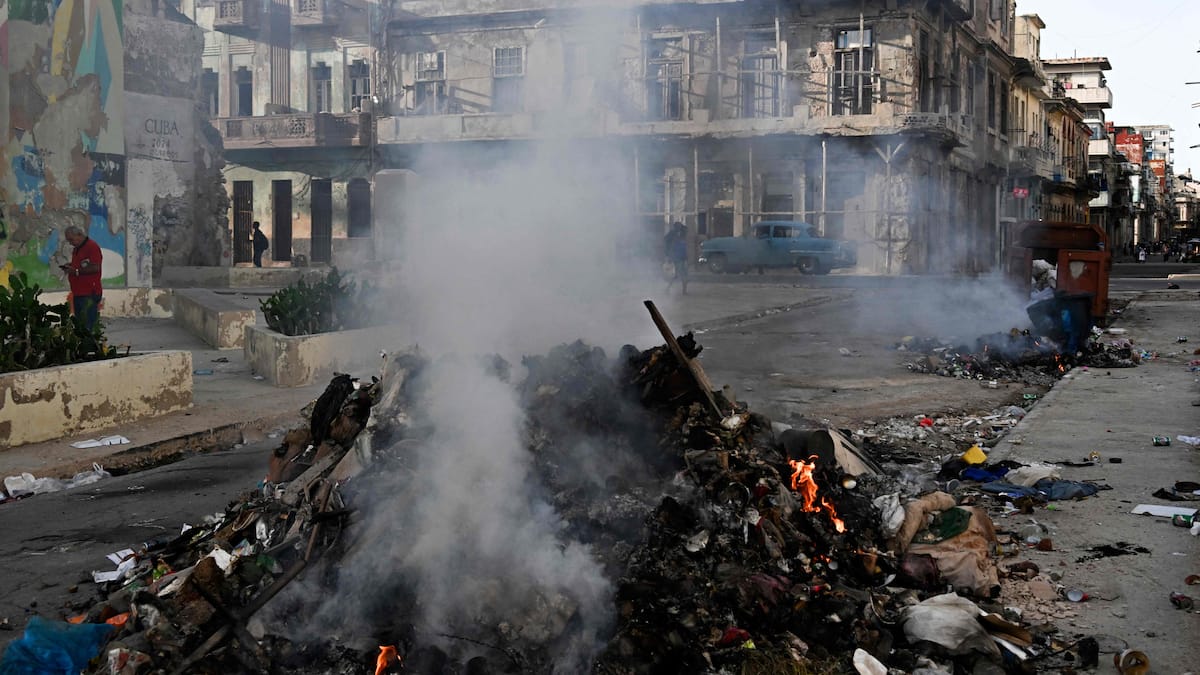
Residents regularly express their exasperation in the most affected neighborhoods by setting fire to piles of garbage or banging on pots and pans.
Network more vulnerable
In the grip of a serious economic crisis for five years, the country regularly suffers general or partial power cuts due to dilapidated infrastructure and fuel shortages.
But the situation has gotten even worse since Washington prevented deliveries of fuel to power generators.
The latter supplement the production of seven aging thermal power plants, which suffer frequent breakdowns or must be shut down for maintenance.
The fuel shortage also makes the power grid more vulnerable to outages and slows restoration work by preventing the use of backup generators, according to the power company.
Since January, Washington has only authorized the arrival in March of a single Russian tanker loaded with 100,000 tons of crude oil. These reserves have since been exhausted.
Relations between the United States and Cuba have become significantly strained since the start of the year, particularly after the capture of Venezuelan President Nicolas Maduro, an ally of the Cuban government.
Donald Trump believes that the communist island, located 150 kilometers from the coast of Florida, constitutes “an extraordinary threat” to the national security of the United States. He warned several times that he could “take control”.
The two countries are holding difficult talks. At the end of June, the head of Cuban diplomacy, Bruno Rodriguez, admitted that there was “no progress” in the current negotiations.