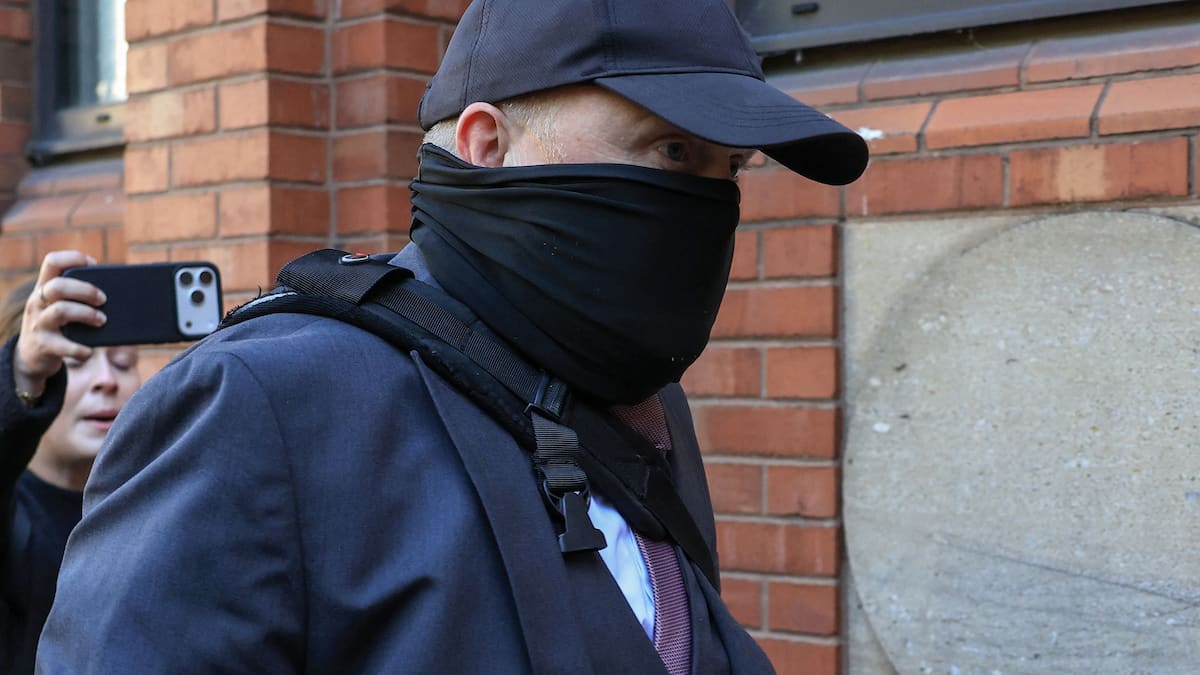

Bodies kept for months instead of being cremated, ashes of strangers given to families: a manager of a funeral home has been appearing in British justice since Monday for a case which has shed harsh light on the lack of regulation in the sector.
This man, Robert Bush, pleaded guilty in April to these facts, which spanned 12 years. The court in Hull, in the north-east of England, is to hear testimony from around a hundred relatives of the deceased during five days of hearing, at the end of which the judge is expected to announce the sentence imposed on the accused.
Robert Bush’s funeral home, Legacy Independent Funeral Directors, was, in the words of one former employee, “like something out of a horror movie,” prosecutor Chris Paxton said at the start of the hearing Monday.
While he enjoyed the trust of these families, he mistreated them “on an almost industrial scale”, “made false promises and stole donations intended for charities”, he added.
Police officers who searched the premises in March 2024 following a report discovered, in a cold room, 31 bodies which should have been cremated several months previously, including a stillborn baby two years previously, and the ashes of around a hundred deceased people in urns.
“There were bodies stored on shelves on either side of the room,” according to the prosecutor, “the vast majority were not covered and were in varying stages of decomposition.”
The body of Norman Bridger, 94, was found there in a cardboard coffin, ten months after his death. His wife and daughter, Karen King, both wore lockets containing ashes that were believed to belong to him.
“How can someone act so cruel? Why did you leave it there? “, his daughter told the court, adding that she “will never know why” Robert Bush did what he did.
The director of the funeral home had declared during his first interview with the police that he had cash flow problems and debts. He then refused to further explain his motivations.
But for the prosecutor, Robert Bush chose to spend “for himself and for others” the money that should have been devoted to the activity of his company. “The financial situation of the company was not catastrophic,” said Chris Paxton, noting the executive’s “extravagant personal spending.”
“Forgotten on a shelf”
Since this scandal, several families have been urging the government to further regulate the funeral industry, in the absence of a regulatory framework for these businesses in England, Wales and Northern Ireland.
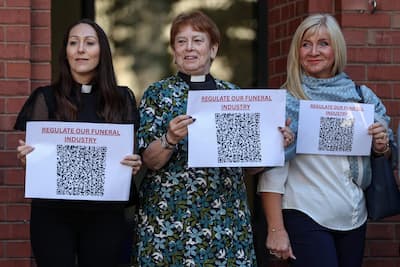
Several families are calling on the government to further regulate the funeral industry, in the absence of a regulatory framework for these businesses in England, Wales and Northern Ireland
AFP
A code of practice was introduced in Scotland in March 2025.
Jasmine Beverley, the mother of the stillborn baby whose body was discovered two years later, is calling for regulation. She told the BBC that she found Robert Bush “charming” and “very respectful” when she entrusted him with organizing her cremation.
“It was a shock to learn what was really happening,” she said, recounting how the remains of her son, Sunny, were found in a brown envelope left on the ground.
The director also admitted to giving four women ashes that were not those of their children who died during their pregnancy.
The family of Raymond Dagnall, a former fisherman, had scattered what they believed to be his ashes in Bridlington Harbour. His body was found seven months after his death in the offices of Robert Bush.
His sister, Christina George, was in tears during her testimony Monday, regretting choosing him for the funeral: “I still blame myself and I think I always will.”
“I try to remember the good memories (…) but I always come back to the image of his body forgotten on a shelf,” she said.
In addition to thirty charges linked to the deprivation of a decent burial, Robert Bush pleaded guilty to theft from twelve charities, after misappropriating donations given by families.