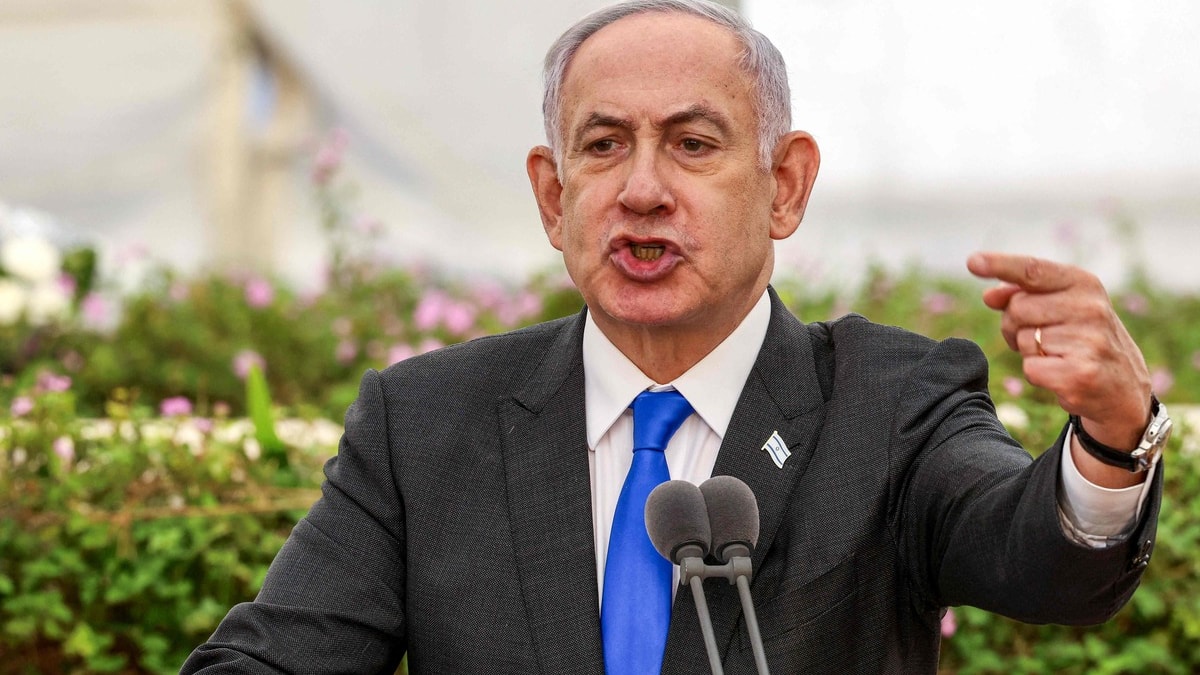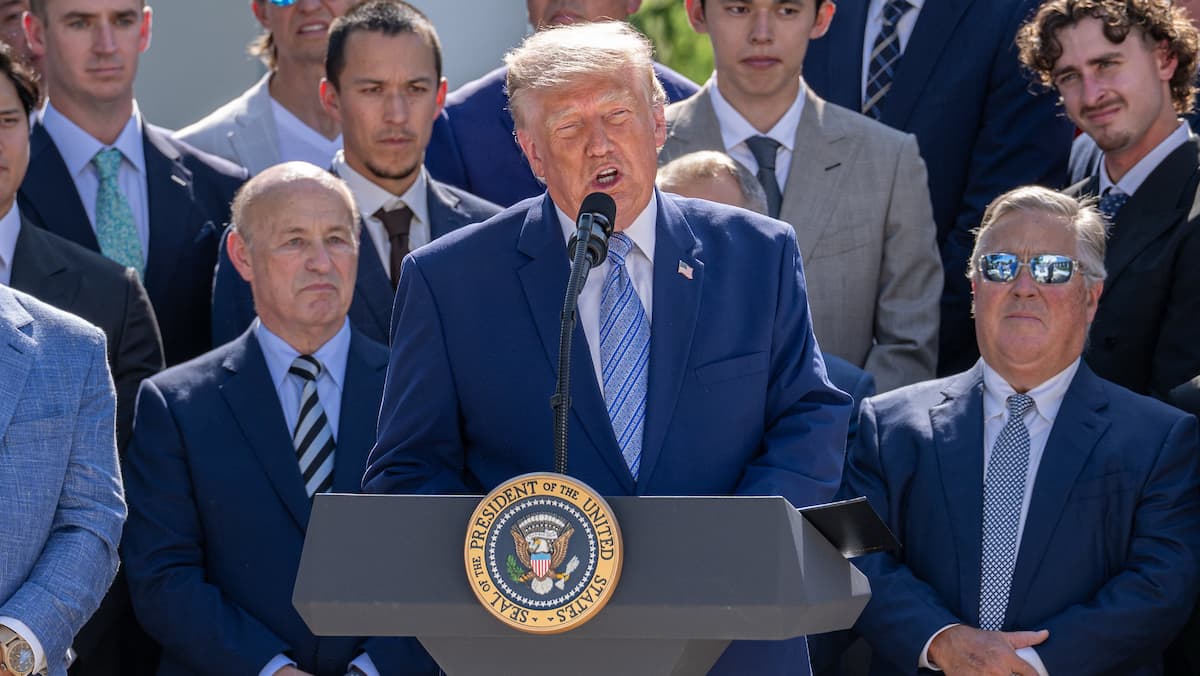

Donald Trump has threatened to destroy Iran so many times that his statements end up losing their impact, says a former soldier.
• Also read: Iran spared from American bombings for the second night in a row
• Also read: “It’s a bit of a mess”: the conflict with Iran is likely to drag on for a long time, predicts an expert
• Also read: Trump plans major bombing of Iran
On Saturday, the US president mentioned that he was considering carrying out even heavier bombings due to the standoff between the Middle Eastern country and the United States.
“Mr. Trump wanted to carry out fairly significant strikes in Iran, but his staff told him that there was a lack of interceptors, therefore patriot missiles costing $4 million,” explained Éric Sauvé, former Canadian Armed Forces officer and president of Innovigo, in an interview with LCN.
The latter now expects a pause in strikes on both sides, as well as a return to the negotiating table.
According to him, the hard-line strategy that Donald Trump has wanted to impose since the start of the conflict is simply not bearing fruit.
“This is not the first time Mr. Trump has made threats. He threatened to wipe out Persian civilization a few months ago. So, we no longer really believe in these threats,” maintains Mr. Sauvé.
The American president’s word is also called into question, in particular because of his recent nuclear agreement with Saudi Arabia.
“The next day, he asked for conditions that are not acceptable, that is, to join the Abraham Accords and accept the existence of Israel. So Mr. Trump’s word is doubted by Iran,” says the former Canadian Armed Forces officer.

LCN screenshot
Poorly planned attack
The attitude of the American president contributes to maintaining the impasse in the Middle East, believes Éric Sauvé.
“Mr Trump realizes there are limits to his power. He thought he could resolve Iran in a few days, just as Venezuela was resolved in one night. This is not the case. His staff, once again, tells him that there are limits to his power. So, he will have to force negotiations and bring the Iranians back to the table,” said the ex-soldier.
The possible lack of ammunition behind the current pause in bombing is also a sign that the American intervention may have been poorly thought out.
“We did not anticipate such a strong response from Iran […] And then, we realized that the strikes in February and March really hurt the stock of interceptors. So, the American president no longer has free rein to do [une poussée] in the region, to have more troops, to carry out massive strikes, because he fears for the security of his troops and his allies,” underlines Éric Sauvé.
Meanwhile, Iranian attacks on some U.S. allies in the Middle East are creating a fissure between those countries and Washington.
“Countries like Jordan and the United Arab Emirates are starting to try to distance themselves from the Americans because they no longer trust Washington, no longer trust President Trump and they are trying to find different allies in the region. There will be a fragmentation, perhaps, of the Gulf countries in the coming months,” maintains the president of Innovigo.
“It will be a long-term consequence of this war, that is to say that there will be a complete remodeling of the Middle East. Has Iran become an important center again? Has Saudi Arabia lost importance? All this will play out in the coming months,” he adds.
To see the full interview, watch the video above.