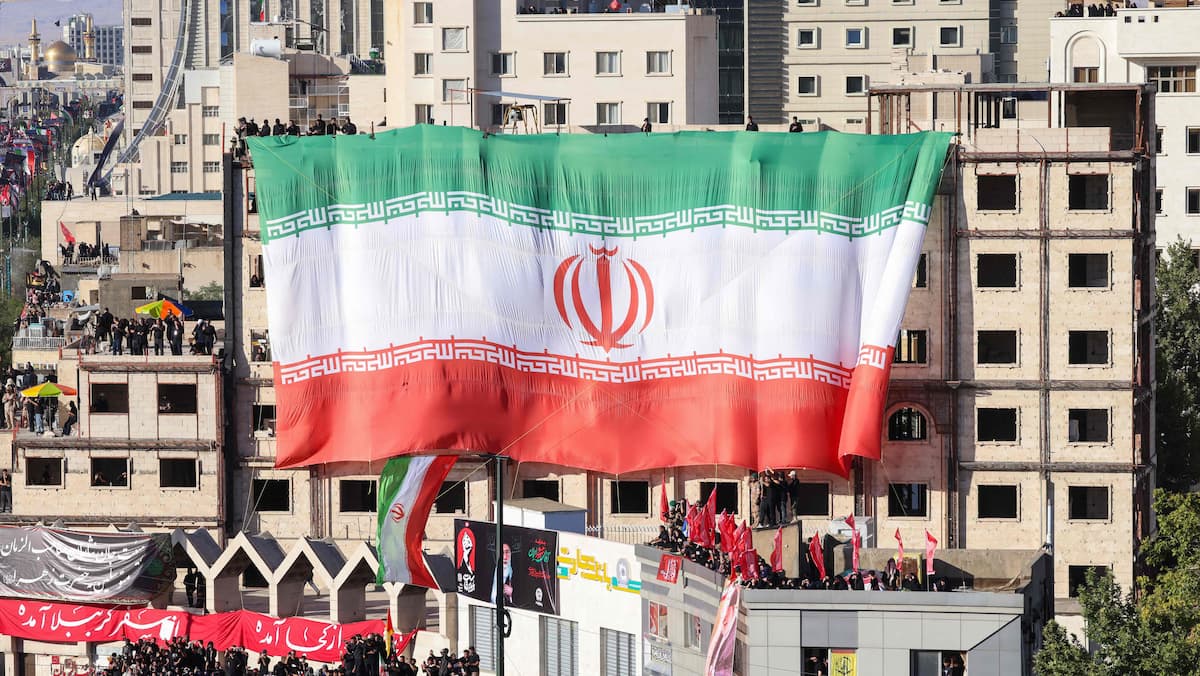

Iranian diplomacy affirmed Monday that it was not currently conducting any negotiations with the United States, despite the recent cessation of fighting between the two countries.
• Also read: Two consecutive nights without American strikes in Iran: oil prices fall by more than 5%
• Also read: The Middle East no longer believes in Trump’s threats and words, says ex-soldier
“Mediators can convey messages to us from the Americans regarding current developments in the region. But at present, we are not engaged in any negotiations with the United States,” declared Foreign Ministry spokesperson Esmaïl Baghaï during his weekly press briefing.
“Claims that Iran has requested negotiations are fabrications that the opposing side disseminates from time to time,” he added.
Hostilities resumed between the two countries on July 7, against a backdrop of tensions in the Strait of Hormuz, which has since been blocked again by Iran.
The clashes have, however, stopped, with Washington saying on Sunday that it wanted to give diplomacy a chance.
“What the president is doing at the moment (…) is leaving room for negotiations. Negotiations are continuing,” American Ambassador to the UN Mike Waltz assured Sunday in American media, while emphasizing that Mr. Trump had not given up on the new escalation with which he threatened the Islamic Republic: he is “keeping all options on the table.”
On Monday, Esmaïl Baghaï criticized the United States, saying that their behavior in recent years “is similar to that of a mafia organization which respects neither the rules nor the laws”.
“As long as the United States continues to act in this way, we cannot hope for the emergence of a reasonable process,” he said.
“Bilateral affair”
The Strait of Hormuz remains one of the main points of tension, disagreements over the management of this sea route having greatly weakened the memorandum of understanding signed on June 17.
Iran insists on maintaining control of the strait and wants to charge for the passage, while keeping Oman associated with this management as a second riparian state.
Baghai said the United States was not involved in recent talks with Oman.
“These discussions have no connection with the United States. This is a bilateral matter between Iran and Oman and they are ongoing,” he said.
The sea route, crucial for global hydrocarbon trade, “remains closed”, he added.
Iranian and Omani deputy foreign ministers met on Friday and Saturday to discuss “common principles and operational mechanisms” to ensure navigation security, he said.
In recent days, the Revolutionary Guards, Iran’s ideological army, have stopped several ships, including six earlier Monday, which were trying to cross the strait outside the route authorized by the Islamic Republic.