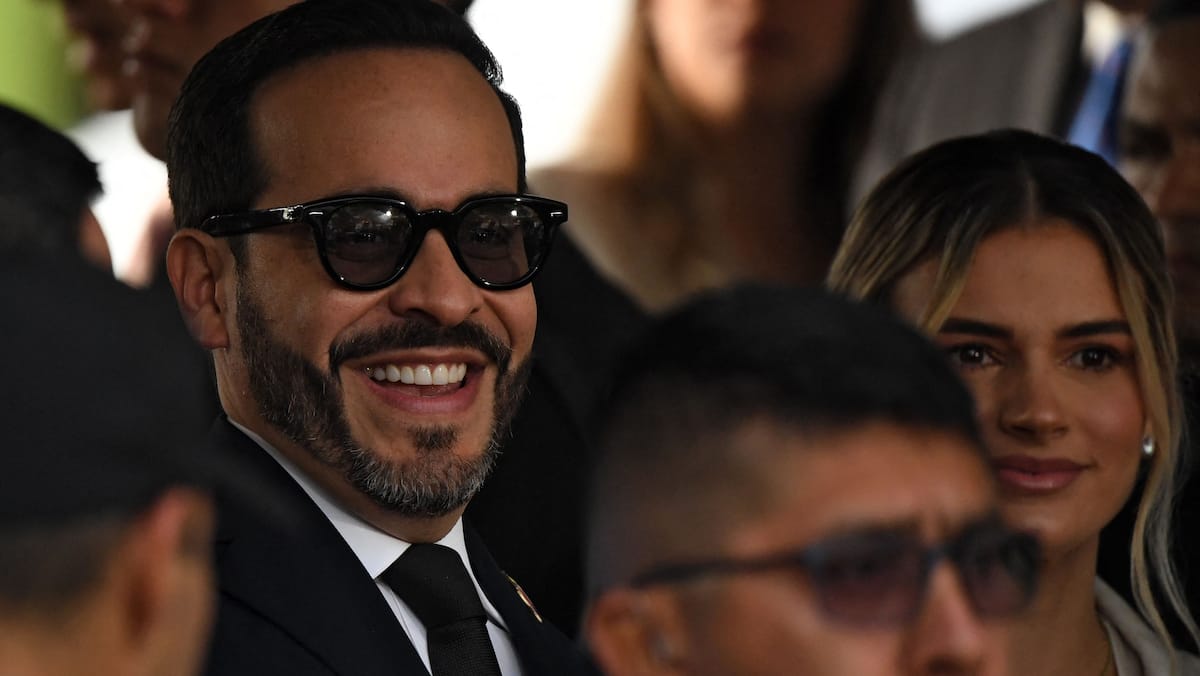

Colombia’s U.S.-backed President-elect Abelardo de la Espriella said Sunday he would sever diplomatic ties with the communist island of Cuba and the government that rules Nicaragua with an iron fist once in power.
• Also read: Former President of Honduras, pardoned by Trump, returns to his country
• Also read: Presidential election: Brazil denies visas to US officials who wanted to meet election authorities
“In my government, there will be no link with tyrannies,” launched the representative of the hard right, who is due to take office on August 7, on social networks. Announcing the closure of 15 consulates and 14 embassies in total, the future head of state clarified that this measure only involved the severance of relations with two countries, “Cuba and Nicaragua”.
Narrow winner of the last presidential election, Abelardo de la Espriella received the support of American leader Donald Trump during the campaign.
Colombia and the United States, two historic allies, are experiencing unprecedented diplomatic tensions since the start of Donald Trump’s second term, who has increased clashes with the outgoing left-winger, Gustavo Petro.
According to the latter, Abelardo de la Espriella “reports directly to the United States Department of State”. He also criticized what he called Mr. Trump’s “interference” in national politics because of his explicit support for Mr. de la Espriella.
In Nicaragua, Parliament and the electoral authority are progressing towards a reform that would ban the opposition from elections, as desired by President Daniel Ortega, in power since 2007. Washington has firmly denounced this project.
Concerning Cuba, relations with the United States have seriously deteriorated in recent months, with Donald Trump having several times threatened to take control of the island.
Abelardo de la Espriella also intends to reopen a diplomatic mission in Jerusalem and suspend the installation of the Colombian embassy in the Palestinian Territories, an initiative by Gustavo Petro.
Bogota is expected to close its embassies in Algeria, Haiti, Barbados, Hungary, Senegal, Ethiopia and South Africa, among others. In Italy and France, for example, representations will be unified.
The president-elect justified these changes on budgetary grounds, saying he wanted to save or strengthen security funding.