
No American bombing was reported in Iran at dawn on Sunday, marking the second consecutive night without hostilities, while American media speak of a possible lack of ammunition after nearly five months of war.
• Also read: Houthis say they shot down a Saudi reconnaissance drone
• Also read: “It’s a bit of a mess”: the conflict with Iran is likely to drag on for a long time, predicts an expert
• Also read: Katy Perry furious with White House for using one of her songs
Although Donald Trump said on Friday that he did not rule out even more massive strikes, this lull contrasts sharply with two weeks of unprecedented attacks since the April ceasefire.
For its part, Iran has not claimed any attack against Gulf countries allied with Washington, and the latter have not reported any night alerts. “As our strategy is essentially based on response, we have also suspended our operations,” said Iranian army spokesman Mohammad Akraminia.
While maintaining his threats towards Iran, Donald Trump affirms that dialogue with Tehran remains open.
“We’re actually talking to them right now,” he said of Iran’s leaders. “I think they are getting more and more serious as the days go by, perhaps for an obvious reason,” he added, referring to the US bombings.
According to the New York Timeswhich cites two sources close to the matter, Washington is concerned about the exhaustion of stocks of Patriot missiles and other defensive equipment protecting Gulf countries, targeted by Iran in retaliation for American strikes. The newspaper also reports fears of an escalation of the conflict.
A break
CNN, citing a source within the Ministry of Defense, also confirmed that military operations against Iran were “on pause”, citing the same reasons.
The United States finds itself in a “difficult and unstable” situation and is probably looking for “a new strategy,” said Mohammad Akraminia.
Two days before a visit to Washington by Benjamin Netanyahu, known for his hard line, he sent a warning to the Americans: if they “allow themselves to be deceived again” by Israel and “insist on continuing the war, in particular through air strikes, it will expand geographically”.
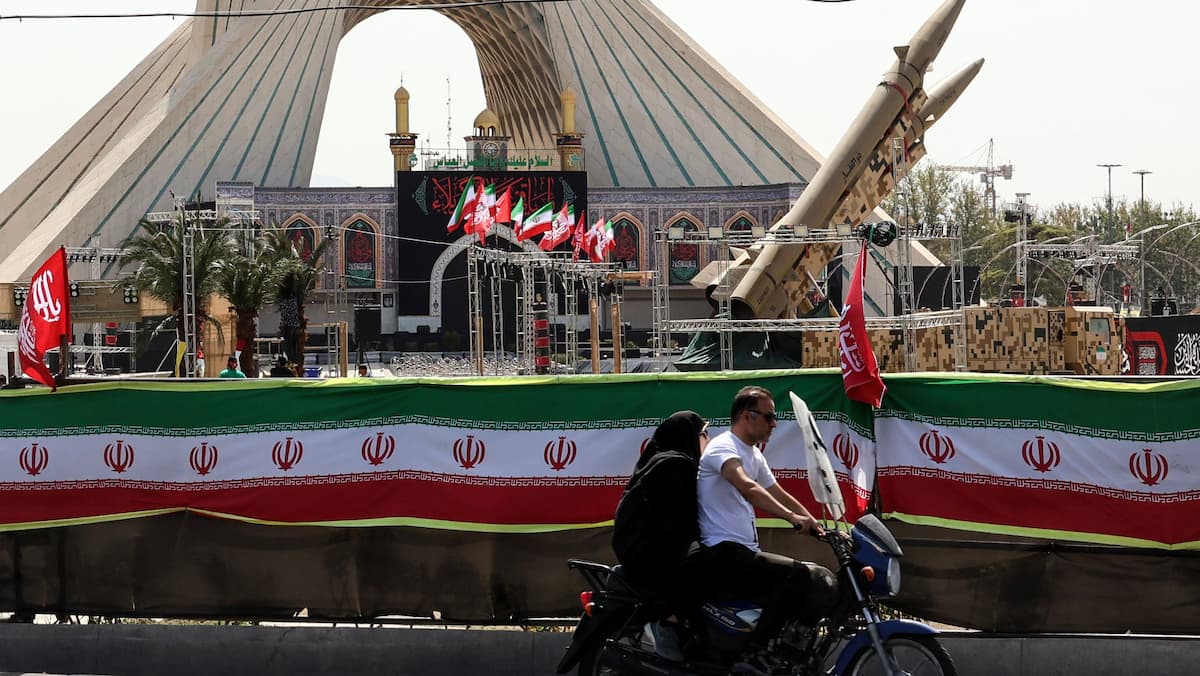
In the capital Tehran, spared from the bombings, life is following its ordinary course, between usual traffic jams and a heat wave, according to the AFP team on site.
The war in the Middle East began on February 28 with an Israeli-American bombing campaign against Iran, killing thousands in the region. It also shook the world economy by paralyzing traffic in the Strait of Hormuz, between Iran and the Arabian Peninsula, through which a fifth of world hydrocarbon trade passed before the war.
The Islamic Republic, which controls this strategic sea route and intends to monetize the passage, announced that it had held new discussions on Friday and Saturday with Oman, whose coasts also border the strait, on its future management.
Yemeni Front
A memorandum of understanding signed on June 17 by Washington and Tehran, providing for the opening of a 60-day round of peace negotiations, shattered less than a month after its entry into force.
The Strait of Hormuz, reopened thanks to this signature, is once again under Iranian control. Six ships attempting to cross it without authorization were stopped in the last 24 hours, according to state television. In retaliation, the United States reimposed a blockade of Iranian ports.
If a lull seems to have settled over the past two days in the Gulf, a new front has opened with the resumption on July 13 of hostilities between Saudi Arabia and the Houthi rebels of Yemen, supported by Tehran.
It was the control of Yemeni airspace that reignited tensions: Iran had dispatched a plane carrying a rebel delegation to Sanaa without seeking authorization from Riyadh, breaking with a practice established for ten years, which triggered strikes attributed to the kingdom on Sanaa airport.
In return, the Houthis attacked Saudi territory for the first time since 2022, notably targeting oil sites on Saturday.
In this context, the head of Iranian diplomacy, Abbas Araghchi, called on the belligerents for “dialogue”, judging that there was “no military solution” to this conflict.