
The context is far from favorable for us to witness a real conclusion to the conflict between the United States and Iran, estimates an expert.
• Also read: Trump plans major bombing of Iran
• Also read: US military announces new series of strikes on Iranian military targets
• Also read: Iran and the United States say they are determined to continue their attacks
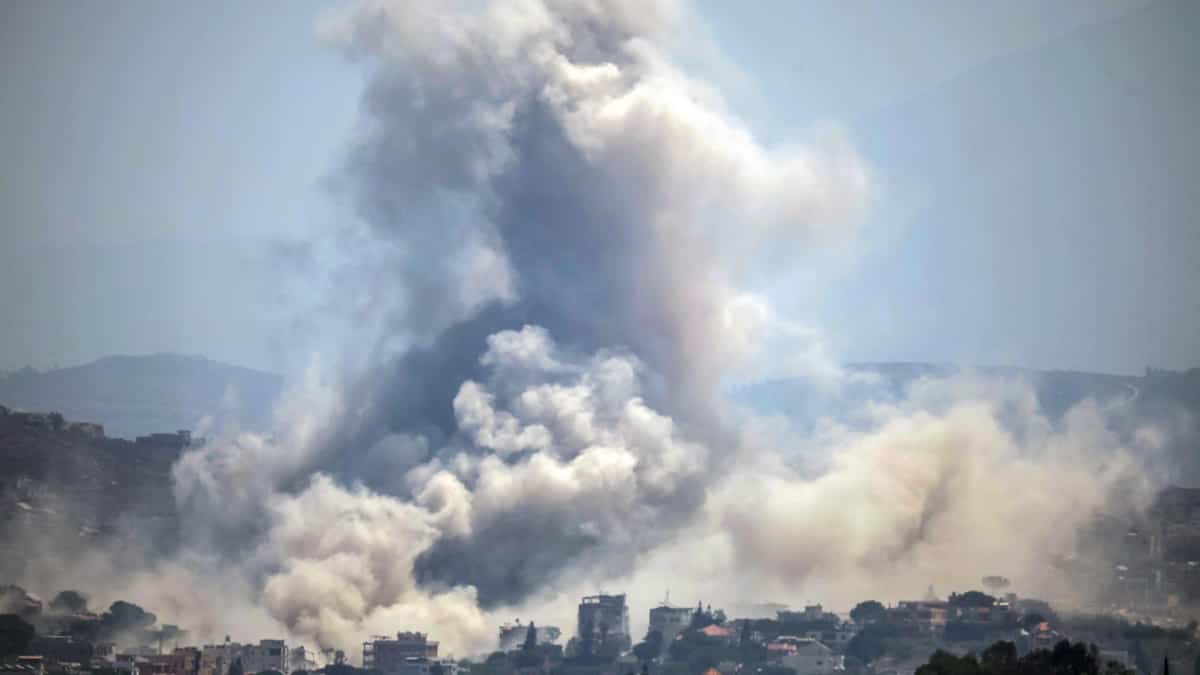
On Friday, Donald Trump spoke of even greater bombings if Tehran does not come to an agreement with Washington, while the conflict widens in the Middle East with Saudi strikes targeting the Houthi rebels in Yemen.
“We left it at an agreement of 14 points, then afterwards we no longer understood very well, then afterwards Hormuz was open then finally no. The freezing of Iranian assets was to be done in part, but not completely. On nuclear power, everything was vague. Honestly, it’s a bit of a mess,” summarized Sébastien Boussois, researcher specializing in the Arab world and director of the European Geopolitical Institute, in an interview with LCN.

Sébastien Boussois, researcher, specialist in the Arab world and director of the European Geopolitical Institute, July 25, 2026
LCN screenshot
The situation remains complex on the diplomatic level, while several allies of the United States want a return to normal in the Strait of Hormuz.
Despite the state of the conflict and the involvement of the Houthi rebels and the Saudi reaction, Mr. Boussois does not believe that we will see a conflagration in the coming weeks.
“The question will be whether Saudi Arabia wants to re-involve itself in a war in Yemen to dislodge the Houthis there. It’s the same story as the Americans against Iran for 10 years: Saudi Arabia tried to eradicate the Houthis in Yemen, it didn’t work, I don’t think it will work today,” says the specialist in the Arab world.
The United States and Iran, for their part, are struggling to sign an agreement, for fear that it will be perceived as a capitulation by one of the two countries.
“We may be in a form of latent war which continues like between Russia and Ukraine, we will perhaps no longer speak at one point because we will have grown tired of it or it will have finally entered, like the COVID pandemic, into everyone’s daily lives,” believes Sébastien Boussois.
“At this stage, I don’t really see what will push one of the two parties to give in to the other, since we are in a balance of power where the United States wants to show that they are the strongest. It’s the same thing on the Iranian side, and it’s like in a football match, there is not clearly one of the two parties which is clearly victorious over the other. So it could actually drag on for a long time,” he adds.
To see the full interview, watch the video above.