

There was talk of fish, oil, gas and visas: after weeks of negotiations, the Europeans finally reached an agreement on Thursday to impose new sanctions on Russia, at the cost of several stepbacks compared to the initial proposal.
• Also read: Agreement within the EU to ban Russian gas in autumn 2027
• Also read: If Europe wants “war” with Russia, “we are ready”, says Vladimir Putin
This agreement, reached in the morning, above all allows it to continue to limit Moscow’s oil revenues, which finance a large part of its war against Kyiv.
Since the Russian invasion of Ukraine in February 2022, the 27 EU countries have sanctioned entire sections of the Russian economy, as well as numerous people or entities.
In order to maintain pressure against Moscow, they regularly adopt new sets of sanctions. For several weeks, Brussels has been debating its 21st package.
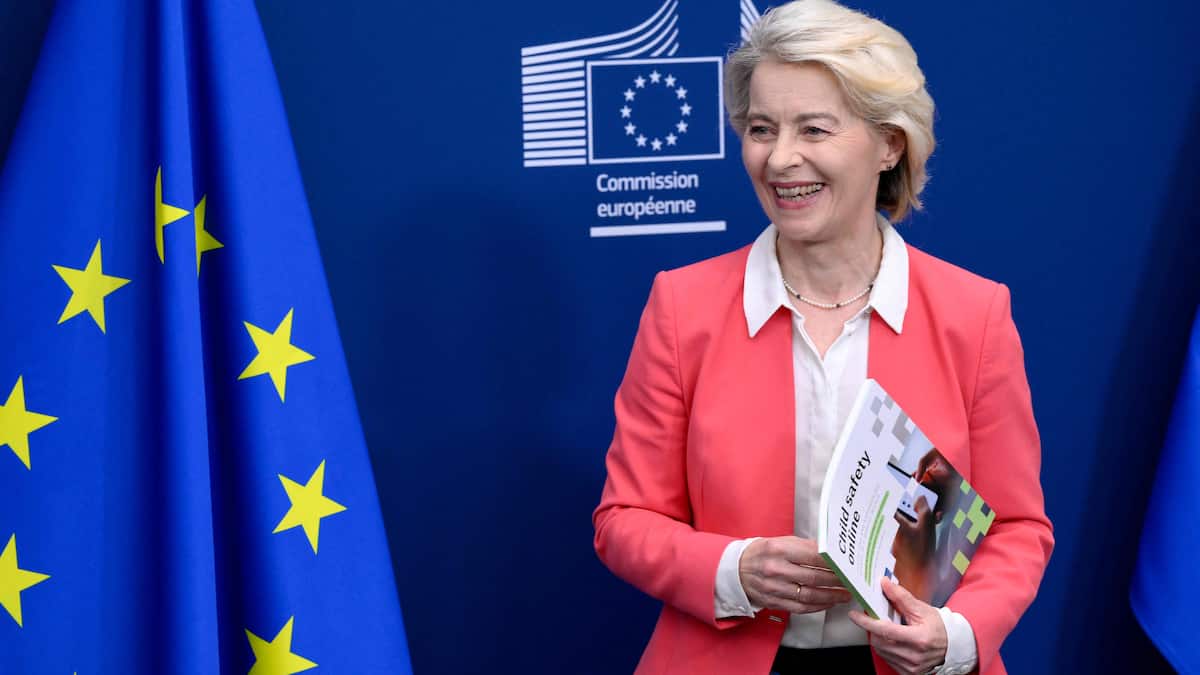
European Commission President Ursula von der Leyen welcomed the agreement reached on Thursday.
“At a time when Ukraine is making progress on the military front, our sanctions continue to weaken the economic foundations of the Russian war machine,” she stressed on the social network X.
Frozen oil
The text adopted in the morning aims in particular to extend for one year a system capping the price of oil exported by Russia, at 44 dollars per barrel.
Without this decision, the price of Russian oil, authorized for export, could have risen, gradually approaching international prices, high due to the war in Iran.
This package of sanctions also includes bans on transactions targeting the Russian financial sector, as well as new measures against cryptocurrencies.
It also targets new oil ships from the “ghost fleet”, used by Russia under false flags to transport energy and other goods.
And it includes new trade restrictions to weaken Russia’s military industry.
The case of Greece
This package, however, had to be significantly reduced compared to the initial proposal from Brussels.
In particular, it had to be adapted to remove Greece’s reluctance regarding liquefied natural gas (LNG).
Athens argued for the EU to allow its companies to continue transporting LNG, as long as it was destined for customers outside Europe. An idea that was not to the taste of the European Commission
A compromise was found on this point.
These transfers of LNG to third countries will be authorized by derogation for contracts concluded before February 24, 2022, the date of Russia’s invasion of Ukraine.
European countries will review this exemption every year.
Several other measures have been abandoned or relaxed.
The European Commission had therefore proposed banning Russians who fought in Ukraine from entering the European Union. According to diplomats, member states have only committed to working towards such a ban in the future.
Bulgaria also prided itself on having managed to block the inclusion of Russian Orthodox Patriarch Kirill on the list of people targeted by an assets freeze and visa ban.
Diplomats also indicated that Portugal and France had opposed a ban on imports of Russian cod and Alaska pollack.
Despite years of Western sanctions, Moscow has managed to continue its war in Ukraine.
European officials, however, believe that these measures are gradually undermining the economic resources of the Russian war machine. According to diplomats, the exercise is nevertheless becoming complicated: after more than twenty sets of sanctions, the Twenty-Seven are struggling to agree on new targets.


