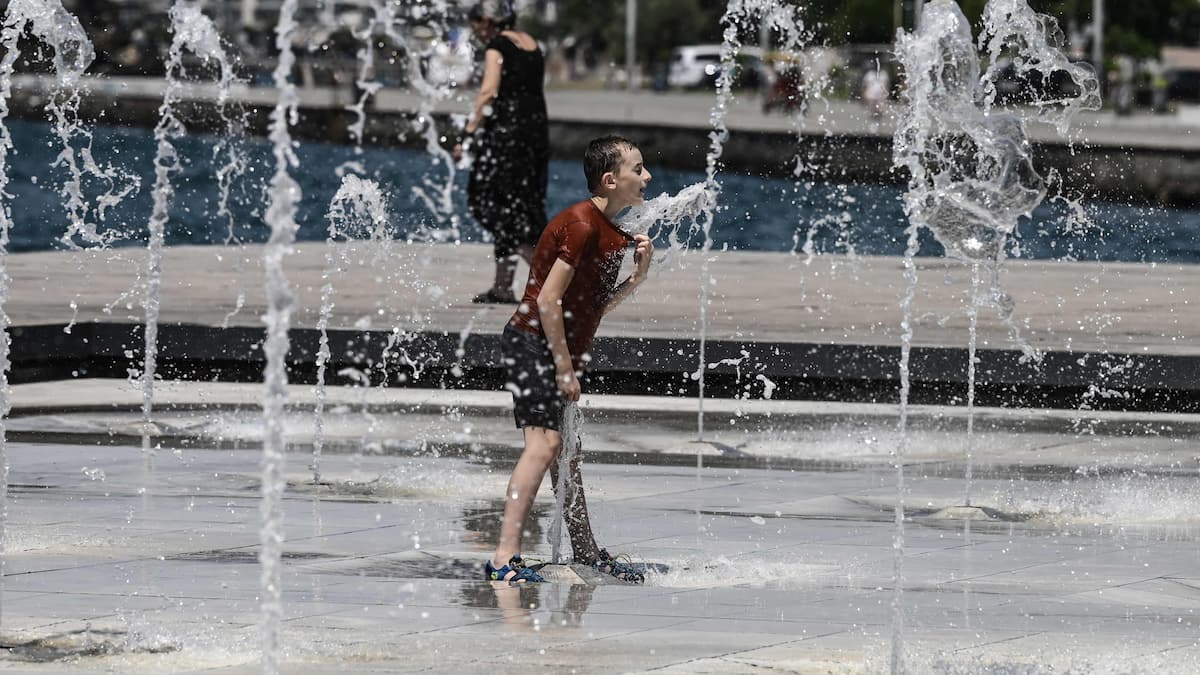

Greece is expected to experience its hottest day of the year on Wednesday, with temperatures locally reaching 43°C, according to meteorologists, while several regions are placed on alert due to the risk of fire.
• Also read: Greece: two dead in a forest fire near Thessaloniki, according to a new report
• Also read: Early heat: five things to know about heatwaves in Europe
According to the emergency bulletin from the Greek Meteorological Service (EMY), the highest temperatures are expected in Thessaly (center), in the east of the country and in part of the Peloponnese (south).
Attica, the region around Athens, central Greece and the Peloponnese peninsula have, for the first time this summer, been placed on alert for the risk of fire, i.e. the maximum risk level, Civil Protection also announced.
In several other regions, including the tourist island of Rhodes (southeast), a “very high” risk of fire prevails due in particular to high temperatures combined with strong winds, according to the same source.
The Minister of Climate Crisis and Civil Protection, Evangelos Tournas, warned that Wednesday would be “very dangerous” and called for increased vigilance.
• Also watch this video podcast taken from Karima Brikh’s show, broadcast on QUB platforms and simultaneously on 99.5 FM Montréal:
“I invite every citizen to respect the instructions of the authorities and to avoid work likely to cause a fire,” he underlined Tuesday after a meeting of civil protection services.
Faced with this intense heat wave in a country accustomed to summer heatwaves, outdoor work is prohibited between 1 p.m. (10 a.m. GMT) and 5 p.m. (2 p.m. GMT) in at-risk regions, according to a circular from the Ministry of Labor.
This measure concerns in particular construction sites and ship repair areas, but also deliveries by two-wheeled vehicles or scooters, particularly of meals.
In the event of non-compliance with this mandatory break, the Labor Inspectorate may impose a fine of 2,000 euros per employee on the company.
For employees belonging to vulnerable groups (pregnant women, sick or asthmatic people, etc.), companies must offer the possibility of teleworking.
This sharp rise in temperatures in July is late in Greece.
The country experienced rainy episodes in June and strong winds in early July while record temperatures were recorded in part of Europe.
According to the meteo.gr website, this is the third time since 2011 that the 40°C mark has been reached at such a late date, after July 20 in 2015 and July 30 in 2013.