
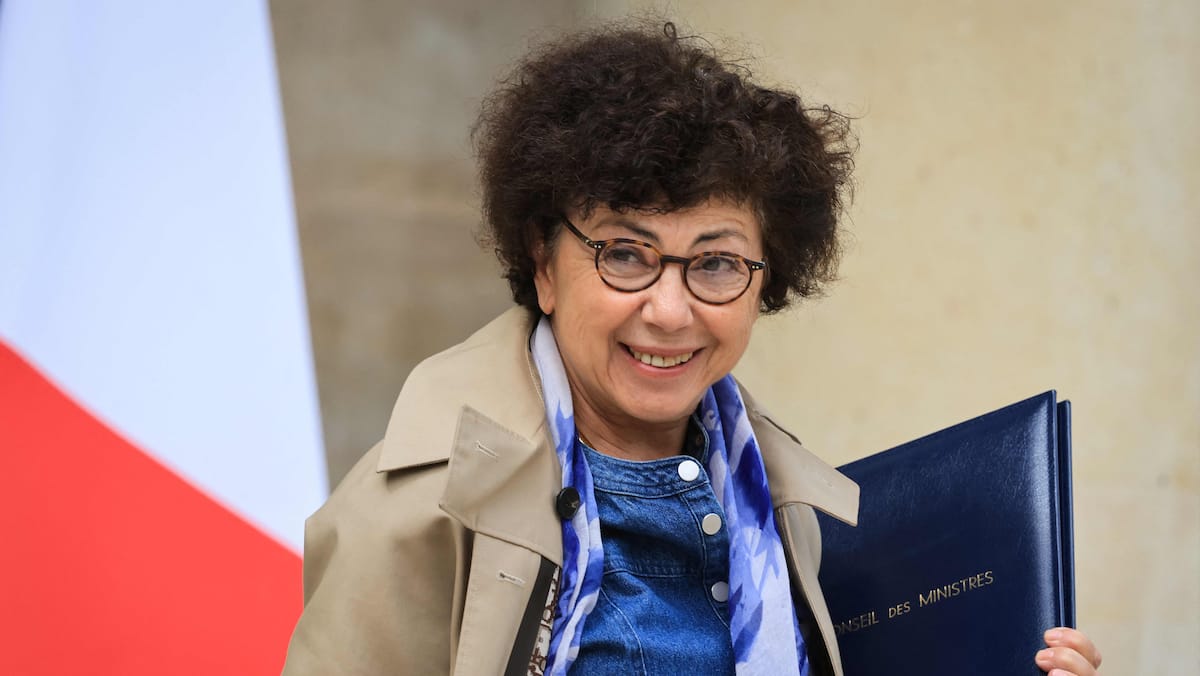

The French Minister for Ecological Transition, Monique Barbut, announced that she would resign on Wednesday after the final adoption by Parliament of a controversial measure on pesticides, to which she opposed.
• Also read: NGOs denounce a “wave of environmental setbacks” in two years in the EU
• Also read: Pesticides present in the air almost everywhere in France
Parliament approved on Tuesday the government’s agricultural emergency bill, which notably includes the reintroduction, by way of derogation, of certain pesticides authorized in the European Union (EU), but banned in France.
“Contrary to the commitments that had been given to me, the government has prevented the debate around the removal of this measure, although it was also desired by the deputies,” wrote the minister in a message published on LinkedIn, estimating that “this turnaround constitutes (…) one environmental setback too many”.
The text provides for the possibility given to the Health Safety Agency (ANSES) to conditionally reintroduce acetamiprid and flupyradifurone for a handful of sectors in difficulty, including those of hazelnuts and beets.
“In 2016, France chose to ban acetamiprid in the name of the precautionary principle, on the basis of available scientific expertise. (…) 10 years later, far from having dissipated concerns, scientific studies continue to fuel doubts about its effects on human health and the environment,” criticized Ms. Barbut on Wednesday.
“Under these conditions, the precautionary principle has lost none of its relevance: it is more essential than ever,” she believes.
A year after the strong citizen mobilization against a previous law which already provided for the return of acetamiprid before censorship by the Constitutional Council, the resurgence of this option still sows controversy. MPs from the government camp suggested on Monday to the executive that it be withdrawn by amendment, which the government refused.
Before becoming a minister, Monique Barbut was president of the environmental NGO WWF France, after having held the position of executive secretary of the United Nations (UN) Convention to Combat Desertification.
“Politics is not my world, and if that is what it is about, it definitely will not be,” said Monique Barbut, who had already put her resignation on the line in January before winning government arbitration concerning the reintroduction of hydrocarbon research projects in certain overseas territories.


