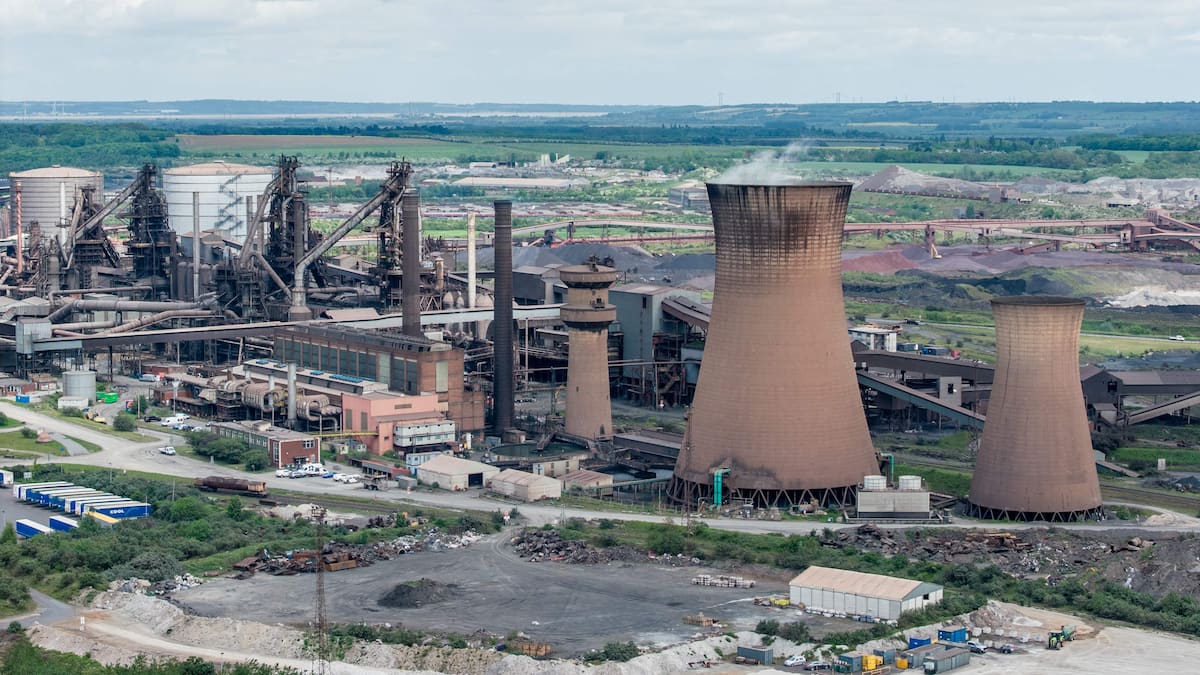

The British government announced Thursday the nationalization of the steelmaker British Steel, previously owned by the Chinese group Jingye, of which the government had already taken control in April 2025 to avoid the closure of two blast furnaces.
• Also read: US customs duties reduced to 10% for British cars
• Also read: Thousands of layoffs in sight for British Steel, penalized by customs duties
“Today’s decision secures the future of steel production in the UK, protects skilled jobs and preserves vital national capacity,” outgoing Prime Minister Keir Starmer was quoted as saying in a statement.
This nationalization was expected after the adoption by Parliament of a special law, which received royal assent on Wednesday, a formality. It brings British Steel back into the fold of the British state after its privatization in 1988.
This company “is part of the fabric of our nation and constitutes a cornerstone of Great Britain’s industrial power”, underlined Keir Starmer, who is to be replaced on Monday in Downing Street by Andy Burnham, former Labor mayor of Greater Manchester.
The government also says a “new management team has been appointed to focus on stabilizing the business” and making British Steel a “commercially viable, low carbon footprint business”.
The Chinese group Jingye, which bought British Steel in 2020, announced last year its intention to close the two blast furnaces at Scunthorpe (northern England), the last operational coal-fired furnaces in the country, due to lack of profitability, with 2,700 jobs at stake.
After unsuccessful negotiations with the company, the British government passed emergency legislation in Parliament forcing British Steel to continue its activity, under penalty of sanctions, an episode which had caused tensions with China.
Jingye is demanding full compensation from the British government for losses linked to investments made before London regained control of the steelworks.
An independent expert will have to assess whether compensation should be paid, the government said on Thursday.
London launched its “Steel Strategy” in March, including 50% customs duties and a reduction in import quotas, with a view to protecting its steel industry, considered vital for its national infrastructure and defense.