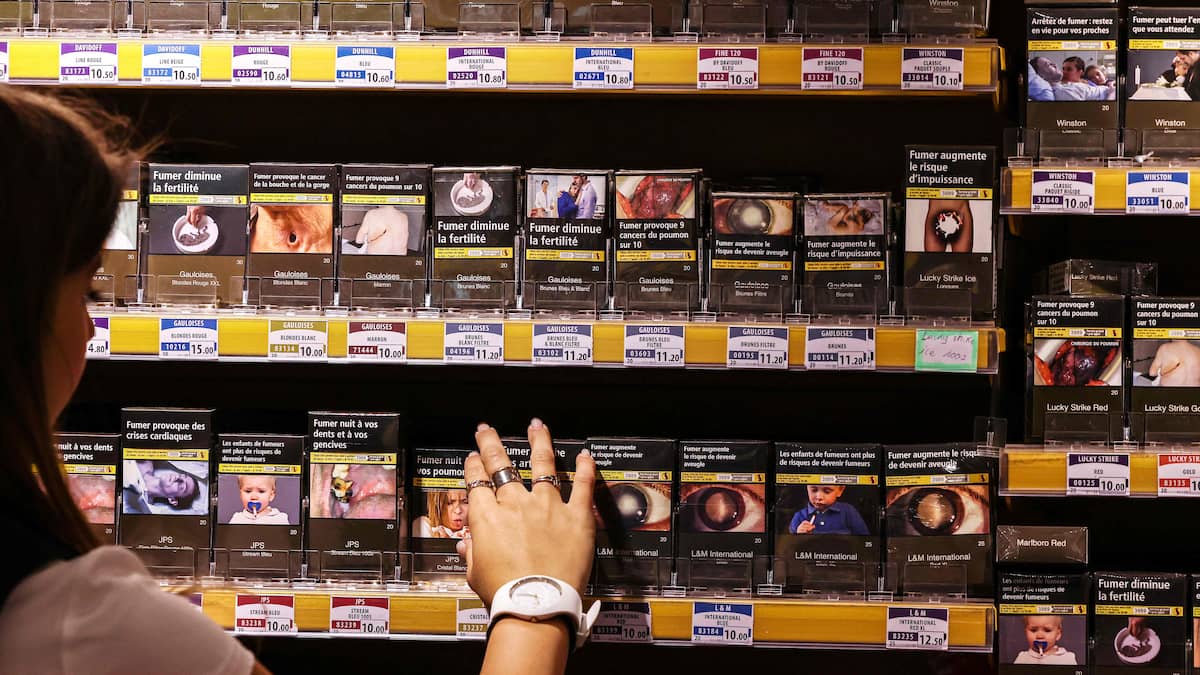


Health Insurance is calling for a ban on the sale of cigarettes to people born after 2009 and thus bringing about a “tobacco-free generation”, it indicates in its annual report “charges and products” published Thursday July 2, intended in particular to “illuminate the budgetary debates” for the fall.
The United Kingdom recently voted for this measure, becoming “the second country in the world” to do so, underlines Health Insurance. “There is no reason to be more stupid” than them, France “is capable of doing that”; while today, “despite everything that has been done (displays on packages, price increases, etc.) we remain poor compared to our neighbors,” said the general director of Health Insurance, Thomas Fatôme, at a press conference.
Health Insurance also proposes to “make the Nutri-Score compulsory on packaged products and at the same time, add information on the ultra-processed nature of the product”. “It is now time to realize the preventive shift” in health policies because prevention is the “battle of the decade” and constitutes “a good investment,” said Samira Lehaine, president (CFDT) of the council of the National Health Insurance Fund (Cnam).
Vaccinate against pneumococci
The Health Insurance deficit is forecast at 13.8 billion euros in 2026, and is expected, according to the latest forecasts, to worsen to reach 15 billion euros in 2027, and 17 billion euros in 2029, recalled Thomas Fatôme.
Among other preventive measures, Health Insurance suggests making helmets compulsory on bicycles and on “motorized personal travel devices” for those over 12 years old, in connection with the increase in “commuting accidents”: they have increased by 7.6% in 2024 and doubled since 2017, she writes.
She also proposes to “build in two years, (…) a major vaccination campaign against pneumococci” for those over 65 with “the same ambition” as that against the flu. Today only 18.7% of those aged 65 and over are vaccinated, and the cost associated with pneumonia and related infections is estimated “between 2.7 to 3.4 billion” euros annually.
In terms of savings, Health Insurance notably proposes “therapeutic de-escalation” efforts in oncology, “without loss of opportunity for the patient”. She would like to “review the scope of prescription” of the very expensive Vyndaqel (cardiac amyloidosis), which tops the ranking of the 20 drugs most reimbursed by Health Insurance. Overall, Health Insurance estimates that its various proposals will make it possible to achieve the objective of 3.9 billion savings per year, “necessary to ensure the sustainability of expenditure” by 2030.