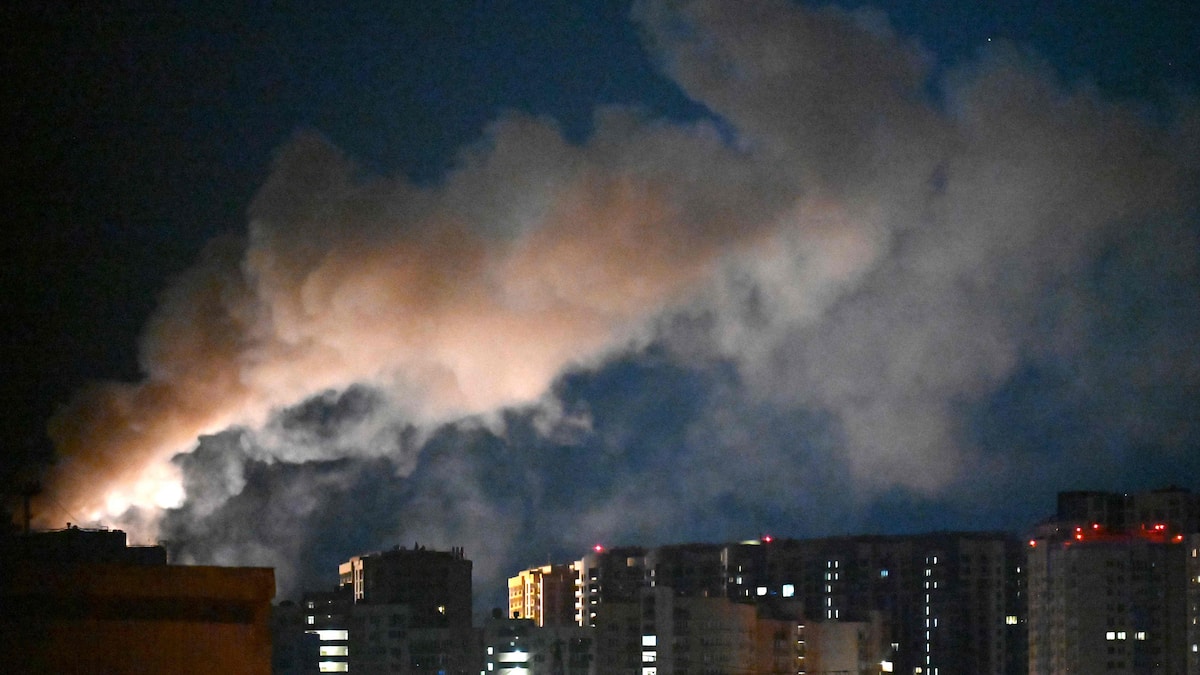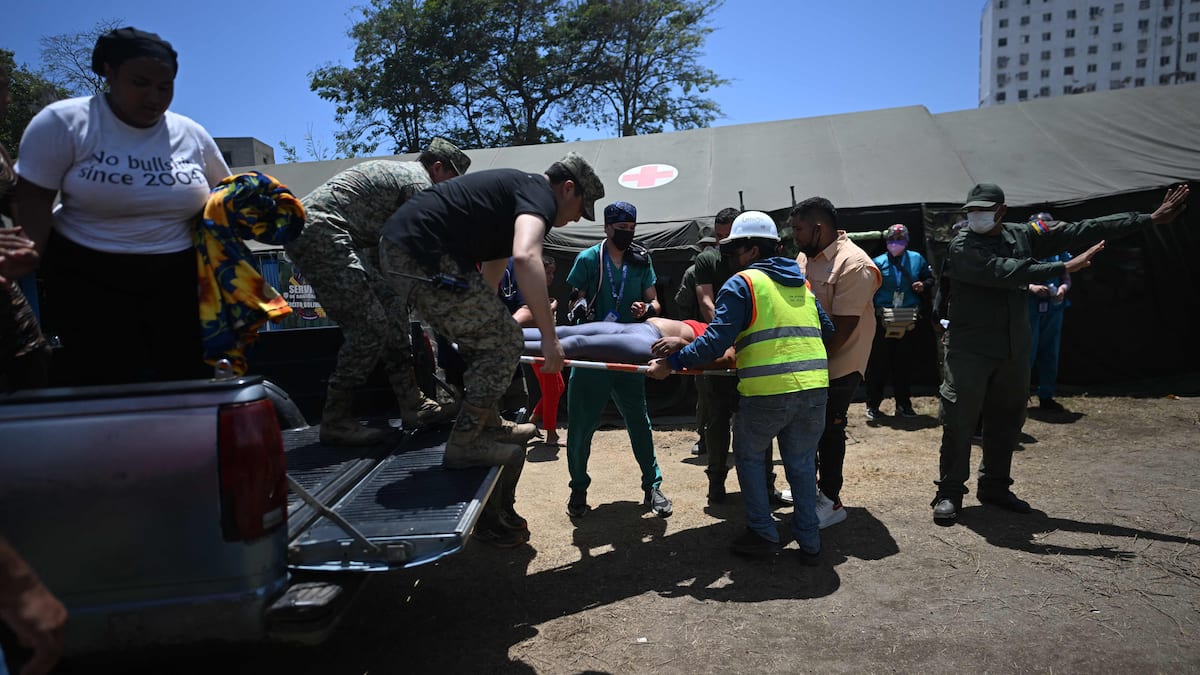

Maria Pessina and her brothers, Venezuelans exiled in Ecuador, Switzerland and Germany, desperately searched in discussion groups for information on the state of health of their mother, of whom they had not heard since the two powerful earthquakes.
• Also read: Earthquakes in Venezuela: the toll on the rise with 2,295 dead and more than 11,000 injured
• Also read: Earthquakes in Venezuela: the UN warns of the cruel lack of food and shelter
On Saturday, a photo confirmed the worst: Magnolia died in the collapse of her building in Caracas.
“This kind of agony is over,” Maria Pessina, a Venezuelan researcher living in Quito, sighed by telephone to AFP after confirming that the clothes on one of the bodies found under the rubble were those worn by her 79-year-old mother.
Maria Pessina could have been there. She had just spent three weeks with her mother and boarded a flight to Ecuador a few hours before the June 24 earthquakes.
“The earthquakes happened while I was flying,” she confides. Upon landing, “my phone started flooding with messages because a lot of people thought I was still in Caracas,” she says.
She quickly “received a video of the building on the ground”, and “the despair went up a notch”, she admits.
With his brothers, they embarked on an agonizing search, activating discussion groups between families and neighbors, even hiring a biker to go through the list of injured people in hospitals.
A WhatsApp group helped connect Venezuelan exiled relatives of residents of the 14-story building where Magnolia lived in Caracas.
Friday, a message on this chat bringing together exiles in Miami, Spain, the Dominican Republic, Panama and Ecuador, announced that a body which could be that of Magnolia had been released.
The next day, Maria Pessina confirmed that it was indeed her mother’s.
“I spent three weeks cleaning and folding her clothes, that’s why I was able to recognize what she was wearing in this photo,” explains this researcher from the Latin American Faculty of Social Sciences.
“No news”
The Pessinas’ despair is repeated among millions of Venezuelans abroad. Many continue to search for family members among the nearly 2,000 dead and tens of thousands of missing.
Some 7.9 million Venezuelans have gone into exile over the past decade, according to the United Nations High Commissioner for Refugees (UNHCR).
From Miami, Madrid or Santiago, this diaspora has mobilized its networks to send medicines and childcare items. And shared many cries for help.
“My brother-in-law Jorge Sedano was in the Vallarta building, in Playa Grande, we still have no news from him,” Andre, who lives in Miami and preferred to withhold his last name for professional reasons, told AFP.
“I have barely slept since this tragedy happened. I publish calls for help, for donations, I reconnect people; we need everything and I receive thousands of messages,” he says.
He was outraged when he learned that rescue operations at his brother-in-law’s residence had been suspended after neighbors caught police officers stealing cash from the rubble.
In this area of La Guaira, ravaged by earthquakes, residents organized themselves alone for several days until international aid arrived.
“They did not arrive in time to save lives. Maybe my brother-in-law was alive in the early hours. They finally only arrived to steal,” he laments.
Farewell Streaming
“It’s strange to be so far away, to continue the routine. We live here, with our heads there,” Broli Rumbos said in a chat with friends from his high school in Spain, when he learned that a classmate spent hours looking for his family among the rubble of a building in La Guaira.
“For better or for worse, we are now experiencing in real time what is happening on the other side of the world,” says Maria Pessina with resignation.
In her mother’s apartment building, located in a middle-class neighborhood of Caracas, “almost everyone had family abroad,” she says.
On Tuesday, they learned on the WhatsApp group that neighbors, a couple and their daughter, had died. Their other son was studying in Italy.
The Pessinas are now wondering how to say goodbye to Magnolia from hundreds or thousands of miles away.
Probably in streaming, “as we are already used to it, we who have built our lives far away,” she comments.
It will be a ceremony with music “because she loved to sing”, but “we don’t know when, everything is very confusing”, confides Maria Pessina.
She would like to share this moment with the neighbors of the Petunia building “this place which now takes on another meaning for all of us”.