
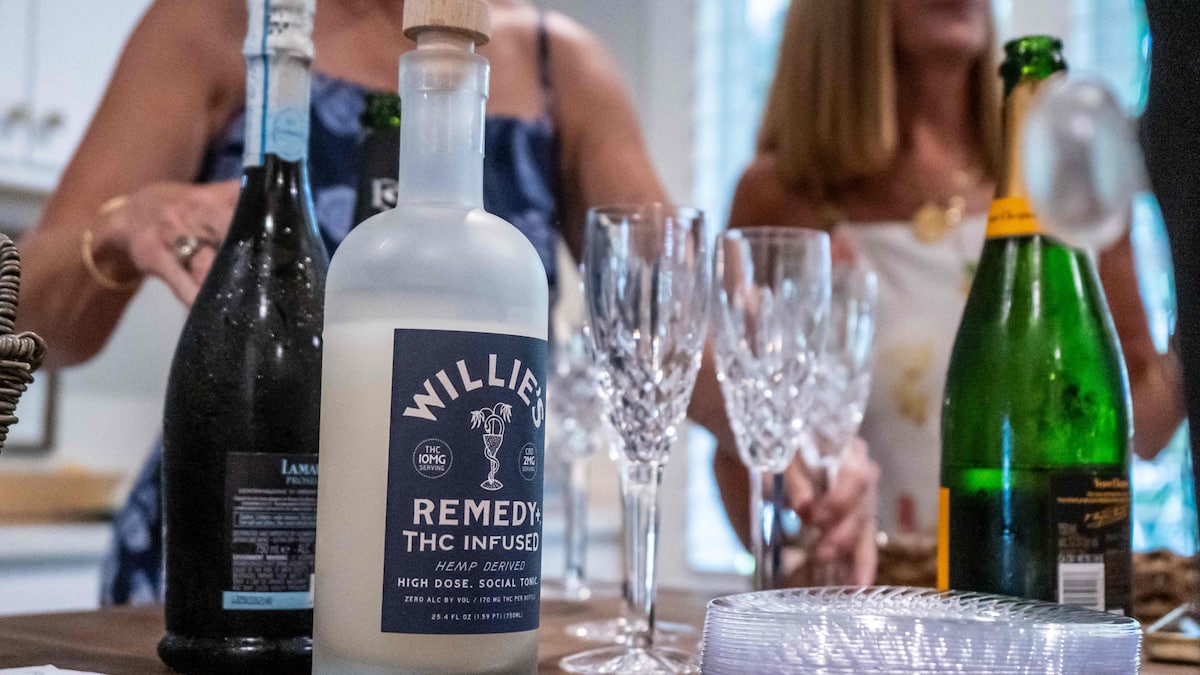

Cannabis drinks may replace beer at traditional barbecues on July 4, a national holiday in the United States.
• Also read: Cancer: cannabis could harm the effectiveness of your treatment
• Also read: First suspected of cannabis trafficking, a somewhat talkative Montrealer arrested for firearms trafficking
More and more Americans are consuming drinks infused with tetrahydrocannabinol (THC), available in supermarkets, less stigmatized than marijuana, long reserved, in the American collective imagination, for hippies and stoners.
At a brunch at her North Carolina home, business owner Cecilia Pfaff offered her guests beer, wine, mimosas, and a large glass bottle with a label reading: “Made with hemp… High dose.” Friendly tonic.”
Inside, no alcohol, but 170 mg of THC — the substance responsible for the intoxicating effects of marijuana. Or 10 grams per glass.
“Almost everyone I know — all of whom work — consumes a THC-derived product, in one form or another,” says Cecilia Pfaff, as she takes quiches out of the oven.
On the other side of the kitchen, Pat Clougherty pours himself a glass of the beverage bought at the local supermarket.
“It replaced a lot of what we drank in the evening,” said this pharmaceutical representative, speaking of him and his wife. “It used to be red wine or beer, but now it’s one or two glasses of that drink,” he adds.
“We feel the effects less when we wake up,” explains Pat Clougherty. In other words: no hangover.
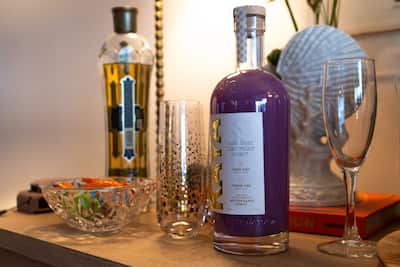
A bottle of THC-infused Kaya beverage sits on a table in Atlantic Beach, North Carolina, on June 13, 2026.
AFP
Increase in sales
In 2025, the Gallup polling institute explained that only 54% of Americans surveyed consumed alcohol, the lowest rate recorded since 1939.
On the other hand, according to the Euromonitor firm, sales of cannabis drinks are exploding as they leave specialized stores for general public outlets.
Trent Mooring launched his THC-infused beverage brand, “Kaya” in Kinston, North Carolina, in 2024, previously making craft beer and flavored sparkling water.
“Sales have tripled over the past year,” he assures, notably thanks to the distribution of his product by a large supermarket chain.
Euromonitor estimates sales of THC drinks at $238 million in 2023, $720 million in 2025 and predicts sales to exceed $1 billion in 2026.
The end of the party?
Marijuana is classified as an illegal drug at the federal level, but is legalized in multiple states.
On the other hand, products derived from hemp, the cannabis plant, with a lower THC content, have been legal at the federal level since 2018.
This has allowed products derived from THC, drinks, confectionery, electronic cigarettes, to see the light of day.
But at the end of 2025, Congress, with a Republican majority, modified the law again. As of November 12, 2026, no product may contain more than 0.4 mg of THC per container — a threshold well below the 5 mg or 10 mg present in many consumer products.
“This is going to wipe out the THC beverage industry,” laments Trent Mooring.
He pleads for the law not to change, while advocating supervision through regulations similar to those for alcohol. “They have to find a solution,” he says.


