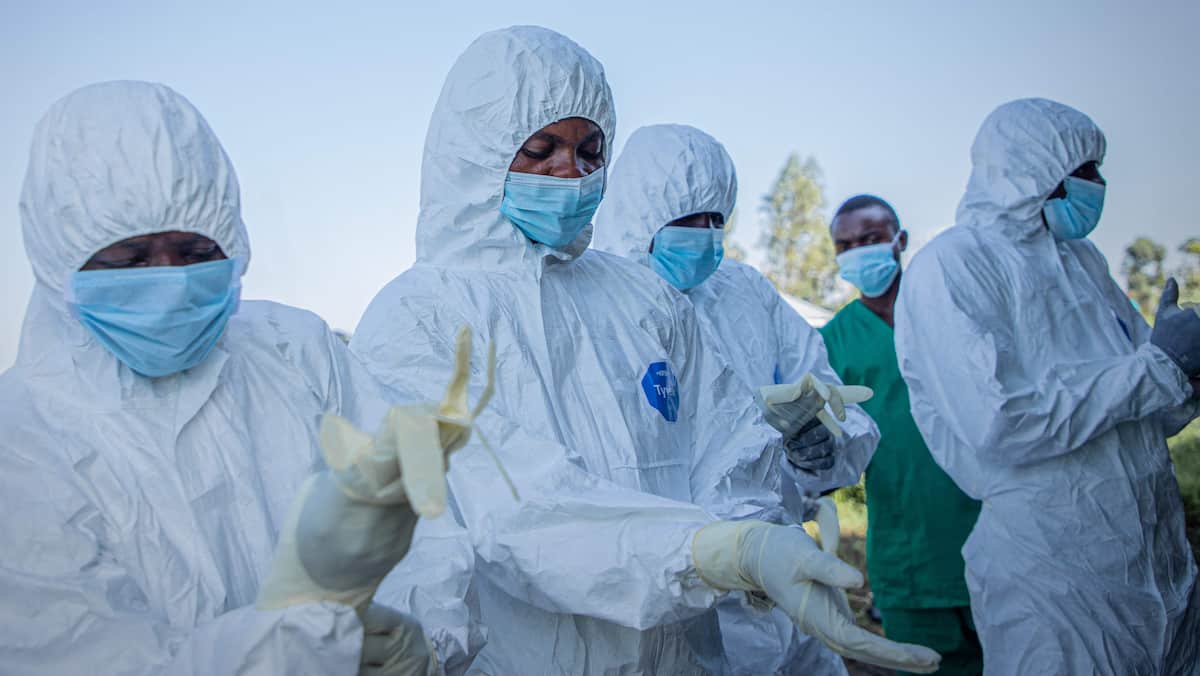

A clinical trial of two treatments against the Bundibugyo virus, a rare strain of the Ebola virus, began Thursday in the Democratic Republic of Congo, hit by a spreading epidemic, the WHO announced.
“Earlier today, the clinical trial of two treatments began with the recruitment of the first patient,” Tedros Adhanom Ghebreyesus, who heads the World Health Organization, told reporters.
This trial — called PARTNERS — should make it possible to evaluate the monoclonal antibody MBP134 and the antiviral remdesivir, when they are administered alone or in combination.
This study is coordinated by the National Institute of Biomedical Research of the DRC, with the support of a coalition of partners including the WHO.
“Patients who participate in the trial will benefit from comprehensive supportive care and close monitoring,” emphasized Mr. Tedros.
“We are also working to ensure they have access to these two drugs if they prove to be safe and effective,” he added.
The WHO also granted emergency use authorization on Thursday to the first molecular diagnostic test for the Bundibugyo virus, for which there is no vaccine or treatment.
In total, 438 deaths and 1,406 cases have been recorded – a case fatality rate of 31.2% – by the DRC authorities since this 17th epidemic was officially declared in the country on May 15.
“The Ebola epidemic continues to expand, with an average of 38 new confirmed cases per day over the past two weeks,” said the WHO chief.
Ten laboratories can now test for the virus and, according to Mr Tedros, contact tracing has improved, with four out of five insured, although there are still many contacts to be identified.
Care capacities have also been strengthened, with around 650 beds available in 22 health centers, although almost 96% of them are currently occupied, and 300 additional beds are being deployed, he said.
But the health response continues to face significant challenges, including “distrust and violence”.
Just this week, an Ebola treatment center in Ituri province was attacked, resulting in the deaths of two people, he said, stressing that such acts endanger patients and health workers and hinder efforts to stop transmission of the virus and save lives.
He indicated that given the complexity of the epidemic, the UN appointed Julien Harneis lead coordinator for Ebola to strengthen coordination and accelerate the response.