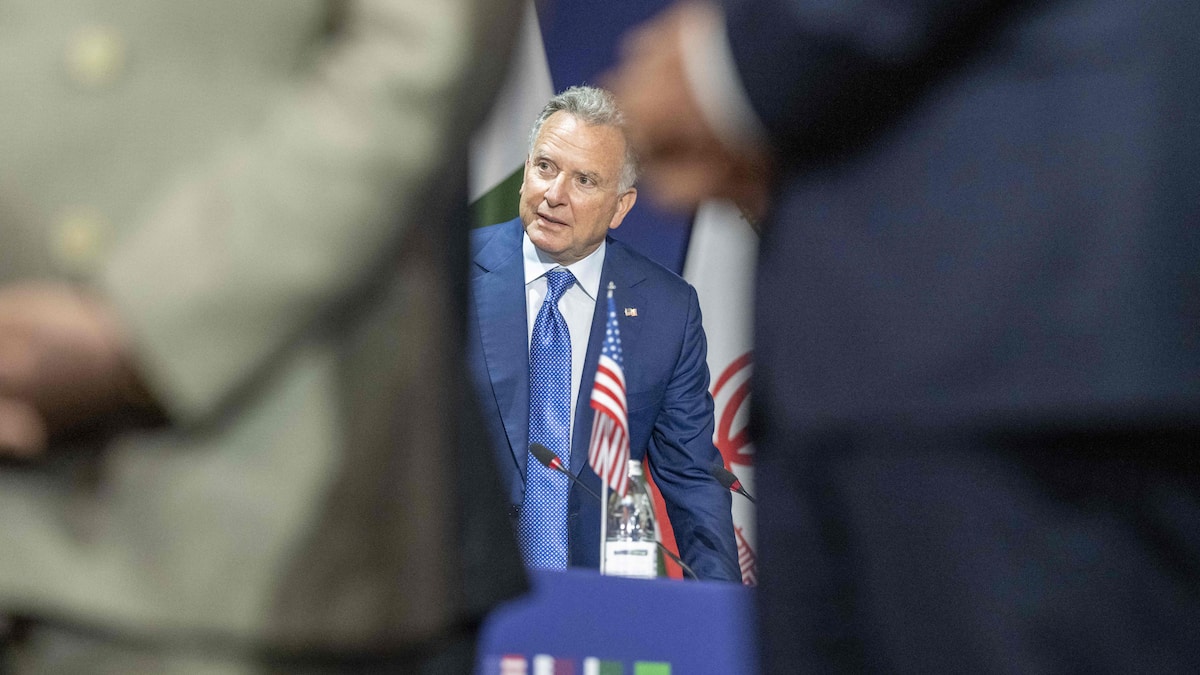

American and Iranian representatives concluded a session of technical and indirect negotiations in Qatar with a view to bringing a lasting end to hostilities in the Middle East, after exchanges of strikes which threatened the truce.
• Also read: Resumption of negotiations between Iran and the United States after Khamenei’s funeral
• Also read: Trump talks about ‘very good’ indirect talks with Iran in Qatar
These meetings follow the signing on June 17 of a memorandum of understanding between Tehran and Washington, leading to negotiations, expected to last at least 60 days, relating in particular to the thorny subjects of the Strait of Hormuz and Iranian nuclear power.
Here is what we know on Thursday about the situation in the Middle East:
What was approved
According to the official Iranian agency Irna, the discussions led to an agreement allowing Iran to acquire the products it needs with part of its assets frozen in Qatar.
The parties also approved the establishment of a communication channel to report and identify possible violations of the memorandum of understanding.
Iranian Deputy Foreign Minister Kazem Gharibabadi, present in Qatar and quoted by Irna, declared that “several subjects related to the expenditure of part of the first six billion dollars (of funds) had been examined”, in reference to part of Iran’s oil revenues, blocked due to sanctions.
Without detailing the content of the negotiations, the foreign ministries of Qatar and Pakistan, mediator countries, welcomed “positive progress”. Donald Trump, who sent his emissaries Steve Witkoff and Jared Kushner to Qatar on Tuesday, spoke of “very good meetings”.
A source close to the negotiations told AFP on condition of anonymity that they had focused on arrangements concerning Hormuz, while the nuclear issue should be the subject of later, more in-depth discussions.
High-level talks were held between the two countries at the end of June in Switzerland but since the American strikes on its soil last week, Tehran has refused direct discussions.
Resumption after Khamenei’s funeral
Doha and Islamabad indicated that negotiations would resume after the funeral of Ayatollah Ali Khamenei, beginning Saturday in Tehran and lasting six days.
The funeral of the former supreme guide, killed on February 28 on the first day of the Israeli-American offensive against Tehran, was initially planned for early March, but was postponed due to the war.
The influential Mohammad Bagher Ghalibaf, head of Iran’s negotiating team and speaker of parliament, called on Iranians to participate en masse.
The authorities expect between 15 and 20 million people in the capital alone.
We do not know whether Ali Khamenei’s son, Mojtaba, who succeeded him at the beginning of March, will participate, even though he has not appeared in public since his appointment.
And on the ground?
The Strait of Hormuz, strategic for global hydrocarbon trade, is among the main points of contention.
There have been no attacks on ships in recent days but this sea route concentrates tensions.
Iran repeats its desire to impose a right of passage, a measure deemed unacceptable by the United States.
During a meeting in Bahrain, defense officials from 12 countries, mainly from the Gulf, “underscored their common commitment to the free flow of trade” in the strait, the American command for the Middle East (Centcom) said on Wednesday on X.
Hormuz is “placed under the command of Iran, not Centcom,” replied Kazem Gharibabadi on X.
On the Lebanese front, the Israeli army said Thursday that it had killed, in what it describes as “security zones”, a person presented as a member of pro-Iranian Hezbollah, ensuring that he represented “an immediate threat to the soldiers”.
Tehran has demanded to include Lebanon in the talks, while Israel occupies part of the south of the country.
In a parallel diplomatic process, a framework agreement for “lasting peace” was signed last week in Washington between Israel and Lebanon. It conditions a withdrawal from Israel on the disarmament of Hezbollah, which refuses to do so.
The text also plans to gradually give the Lebanese army control of “pilot zones” in the south with the aim of eventually allowing the return of civilians, but Beirut is waiting for the Israeli army to begin its withdrawal.