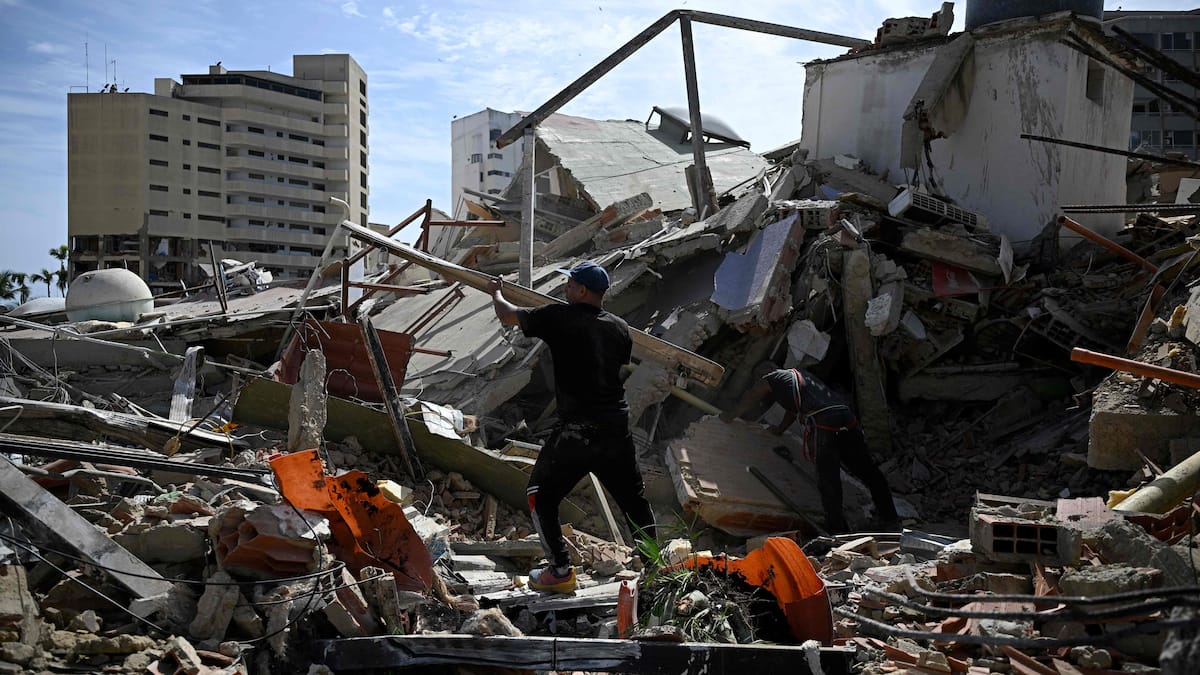

In Venezuela, rescue teams are working in a real race against time to extract the greatest number of victims from the rubble, following the two earthquakes that occurred in quick succession.
• Also read: “Antonio!” », “Tania! »: after the earthquakes, Venezuelans search for their loved ones
• Also read: Building collapse in Venezuela: see images of the damage caused by the two earthquakes
• Also read: LIVE | Double earthquake in Venezuela: at least 164 dead and nearly 1,000 injured, according to a new provisional report
Patrick Villardy, president of the Light Intervention and Rescue Unit, based in Nice and with 16 interventions on earthquakes around the world, described extremely complex work in an interview on LCN on Thursday.
Asked about the window of time remaining to find survivors, Mr. Villardy provides a nuanced answer.
“It is random, it can last a week. We found victims a week, even 15 days later, these remain exceptions, miracles if we can say so. […] But the first six days are crucial. »
One of the major difficulties of this type of intervention remains the management of aftershocks. In the field, the teams have developed well-established protocols, sometimes rudimentary in their form, but extremely effective, indicated the French expert in seismic rescue.
Locating a survivor buried under the rubble requires a variety of techniques. Mr. Villardy emphasizes an often overlooked point:
“A dog’s sense of smell can go up to 12 meters deep, whereas a device, a camera, is not at all the same. »
The nature of the collapsed buildings also plays a determining role. A reinforced concrete building always offers pockets of survival — under a bed, a table, a refrigerator — where an earthen construction leaves little hope, he said.
See the full interview in the video above.