
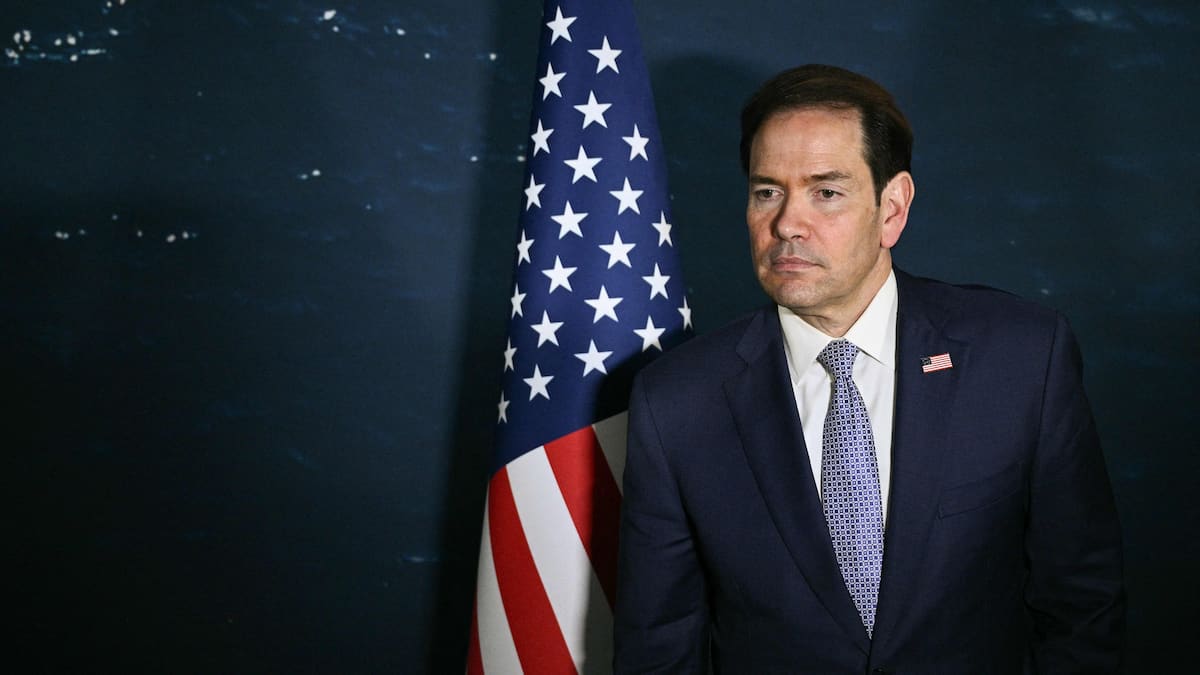

US Secretary of State Marco Rubio said on Wednesday that allowing Iran to control the Strait of Hormuz would create a “dangerous precedent” with consequences even beyond the Middle East, where Tehran and Washington have resumed hostilities.
• Also read: The United States launched a new round of strikes in Iran
• Also read: Trump says US is ‘not done at all’ with Iran
• Also read: Trump says he wants to “help a lot” Lebanon by receiving President Aoun
“If we set a precedent in the Middle East where a nation state can decide to control an international waterway, charge a toll and blow up boats if they don’t pay, we will set a very dangerous precedent that will be repeated in other parts of the world, including in this region,” Marco Rubio said during a meeting with the Association of Southeast Asian Nations (ASEAN) in Manila, Philippines.
“Basically, it’s very simple. Iran claims the right, which it does not have under any existing legal mechanism, to control traffic passing through the Strait of Hormuz,” he noted.
However, “there is a fundamental principle regarding freedom of navigation, and it is threatened. I think the global economy is under threat, as are the rules that have governed international trade for 150 years, and we cannot let that happen,” he added.
Tehran is once again blocking the Strait of Hormuz and Washington has resumed its blockade of Iranian ports since the resumption of clashes two weeks ago, which threaten to spread to the Red Sea and further affect the world economy.
Mr. Rubio’s comments come as the Asia-Pacific region itself faces China’s actions in the South China Sea, another crucial sea lane for global trade.
“The United States remains open and willing to conduct positive and constructive negotiations and discussions, provided that the commitments made are respected,” said Mr. Rubio, deploring that the Iranian authorities “do not take the negotiations seriously”.
“If they are serious, we will be serious too. If they are not, then we will do what is necessary to protect our interests as well as those of our allies,” continued the head of American diplomacy.
Mr. Rubio is participating in a meeting of his Asean counterparts and must take part in several meetings on the sidelines, notably with the other Quad countries (India, Japan, Australia) and, later on Wednesday, with Chinese Foreign Minister Wang Yi.