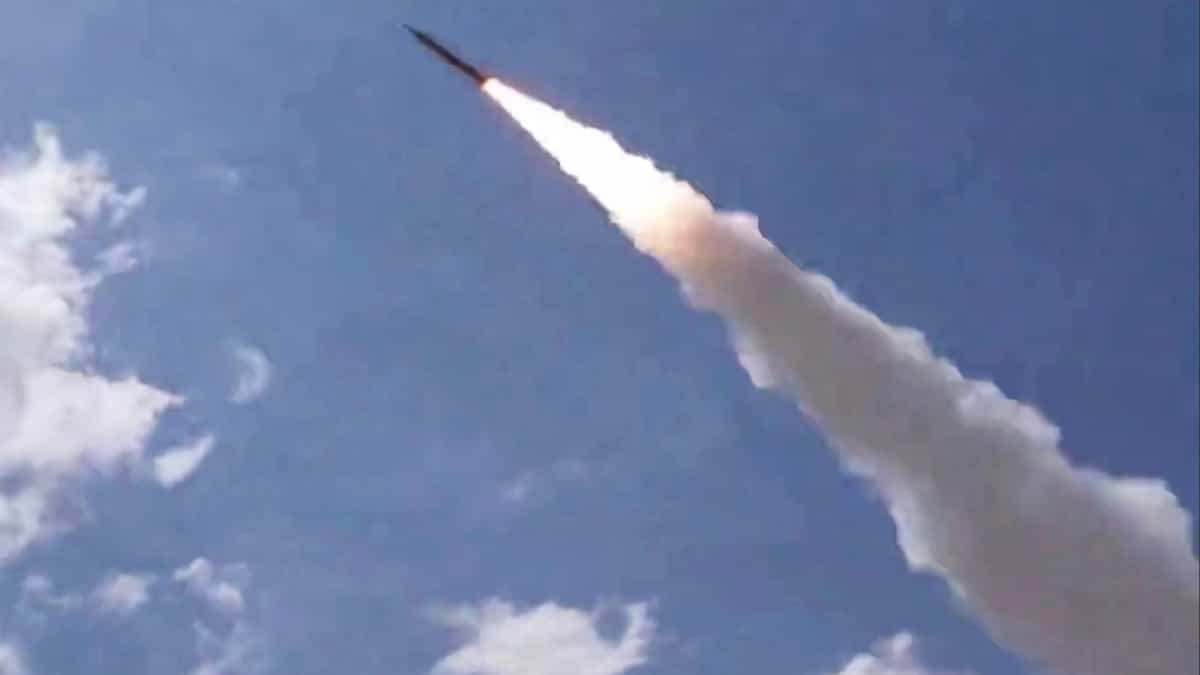

Iran threatened to launch an “all-out offensive” on Friday as the United States bombed the country for the seventh night in a row and Iran’s civilian infrastructure was no longer spared, marking an intensification of the war.
• Also read: China, Pakistan call on US, Iran to resume negotiations
• Also read: Eight Iranian Kurdish rebels killed in Iraq strikes, opposition group says
• Also read: New night of bombings in Iran, US allies still targeted
The American army announced on Friday that it was carrying out a new series of strikes against Iran, which “aim to continue to weaken Iranian military capabilities,” it said on X.
Explosions were heard in southern and central Iran, Iranian agencies reported.
The day before, the American army had claimed to have attacked “dozens of Iranian military targets such as coastal surveillance and air defense sites, military logistics infrastructure and maritime installations”.
Strikes which left eight dead, according to the official Iranian agency Irna.
The Iranian authorities, for their part, reported damage to the electricity network in the south and called on residents to reduce their electricity consumption, as well as bombings on bridges, a port, an airport, telecommunications infrastructure and a train station.
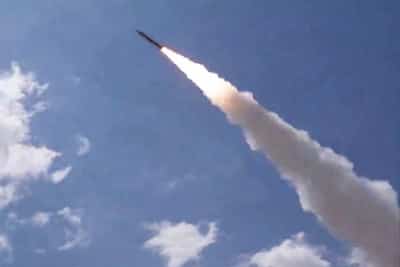
This screenshot taken from video footage published on July 17, 2026 by the Sepah News site of the Iranian Revolutionary Guards (IRGC) shows a missile launched from an undisclosed location towards US targets in Qatar, Kuwait and Oman.
AFP
Washington has not confirmed this information.
Oil tankers on fire in the Strait of Hormuz
The Revolutionary Guards, Iran’s ideological army, also announced that two oil tankers had “exploded and caught fire” while passing through a mined area south of the Strait of Hormuz, without specifying the nationality of the ships or whether there were any victims.
US President Donald Trump threatened this week to strike Iran’s bridges and power plants if its leaders did not return to the negotiating table.
Tehran will enter “a phase of total offensive” if American strikes continue beyond “two-three days”, Mohsen Rezaï, military advisor to the Iranian supreme leader, threatened on Friday, quoted by state television.
“Iran will no longer simply retaliate and no border will be safe,” he declared, according to the same source.
The Revolutionary Guards warned that the strikes “will continue until calm returns to the southern coast and the Strait of Hormuz.”
” Trap “
“The Strait of Hormuz is becoming a trap for both belligerents. The logic of escalation is increasingly eluding them,” analyzes David Khalfa, Middle East specialist at the Jean-Jaurès Foundation, who is concerned about the “risk of a broader regional confrontation.”
In Kuwait, a power and water desalination plant was hit by an Iranian attack, according to the emirate, which also called on users “to rationalize their electricity consumption during this exceptional phase”, in a country where temperatures reach 48°C.
The armed forces of Kuwait, Jordan, Bahrain and Qatar, all close allies of the United States, also announced that they faced air attacks at dawn on Friday.
In Qatar, mediator of the conflict, the Revolutionary Guards claimed to have targeted the American base of Al-Udeid, saying they had destroyed radar systems and military planes there to “punish the aggressor”.
“I was in my bed, ready to sleep, and I heard the alert,” Abu Baker, a 27-year-old Sudanese government employee living in Qatar, told AFP. “I was hoping it would be over the sea, but it exploded and my house shook,” he explained, fearing “that this war would drag on.”
Clashes resumed on July 7 after attacks on ships in the Gulf, blamed on Iran. The strikes carried out since then are unprecedented since the April ceasefire.
International pressures
Triggered on February 28 by Israeli-American bombings, the conflict has left thousands dead, mainly in Iran and Lebanon, and continues to shake the world economy.
The foreign ministers of China and Pakistan, the latter country also mediating the discussions, called on the belligerents to resume negotiations within the framework of the memorandum of understanding signed in mid-June, which was shattered.
Islamabad also called for a “return to normal in the Strait of Hormuz”, once again blocked by Iran since last weekend and where traffic has become rare. The United States has reestablished its blockade of Iranian ports.
Oil prices rose further on Friday, with the price of a barrel of Brent climbing 4.60% to $88.10, however remaining far from the $126 seen at the start of the conflict.