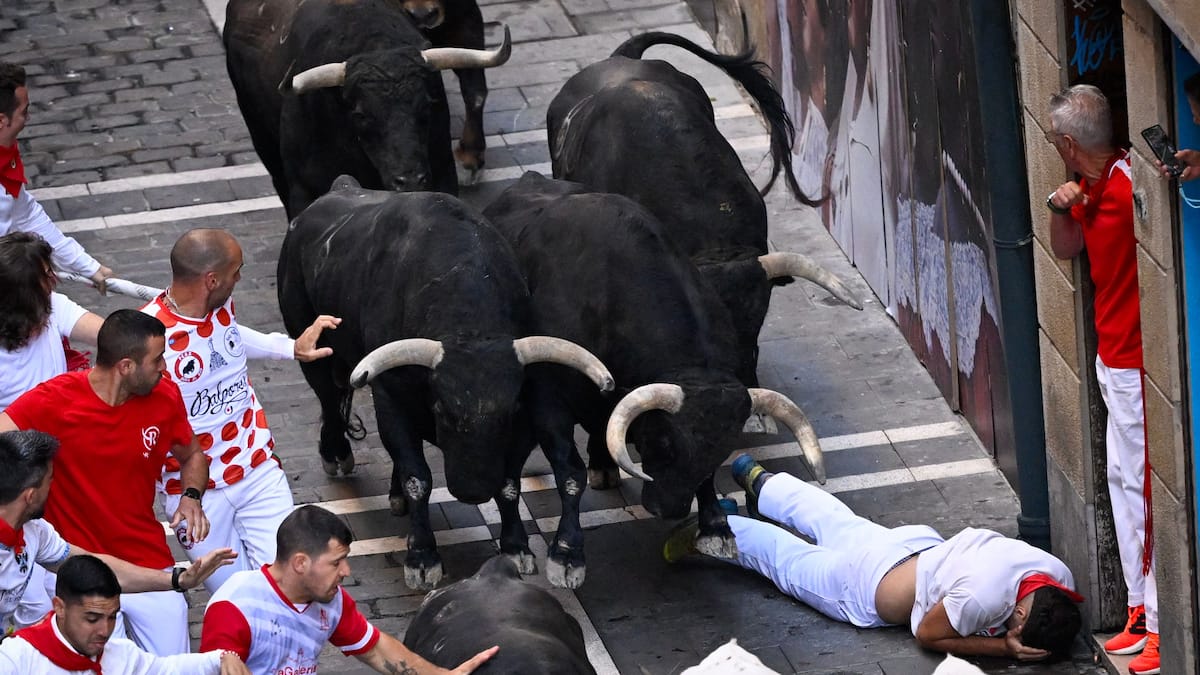

This year, the San Fermín celebrations in Pamplona, in the north of Spain, left 57 injured, including four gored during the “encierros”, the releases of bulls that have become the emblem of the celebrations. The regional government communicated this report on Tuesday, on the last day of the festivities.
• Also read: Man survives fire in Spain, leaving wife and friends behind
• Also read: While traveling in Spain, Mariana Mazza takes the opportunity to send a message for body positivity
• Also read: Death toll from fire in Spain rises to 13 after British woman dies in hospital
These traditional races are held every morning at 8:00 a.m. throughout the holidays, which attract visitors from the four corners of the world each year.
Among the injured, mostly victims of falls and bruises, are several foreigners: an Australian, a British, an American and a German, the latter having received a blow to the left arm from a horn.
Four of them are still hospitalized, the others having been able to return home, according to regional authorities.
For eight days, hundreds of participants raced down the cobbled streets of the city for some 850 meters, in front of six fighting bulls, seeking to get as close as possible, or even brush against them.
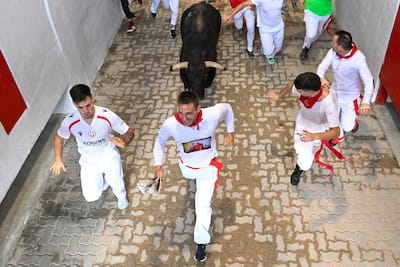
Participants run in front of the bulls of the Jandilla ranch during the eighth bull release of the San Fermin festival in Pamplona, northern Spain, July 14, 2026.
AFP
The race is open to anyone over 18 years old. It concludes in the arena, where the six bulls are put to death during a bullfight organized in the afternoon.
Every year, the “encierros” cause dozens of injuries, and sometimes deaths. The last death dates back to 2009, when a 27-year-old Spaniard was gored. Since 1911, when official censuses began, at least 16 runners have lost their lives.
The festivities, whose origins date back to the Middle Ages, open on July 6 with the launch of the “chupinazo”, a pyrotechnic rocket, and close on July 14, after a week of concerts, religious processions, fireworks and nights lasting until dawn.
The American writer Ernest Hemingway made them famous in his novel “The Sun Also Rises” (The Sun Also Rises1926).