
Power gradually returned to Cuba on Tuesday after a new general blackout, the third in less than six months on the island grappling with an oil blockade from the United States.
• Also read: New general power outage in Cuba
• Also read: “No progress” in talks between Cuba and the United States, according to Havana
Ten provinces, including Havana, out of the country’s 15, are now reconnected to the electricity grid, authorities said. But low production does not mean the restoration of power to all homes.
Havana’s electric company announced that more than 65% of homes in the capital of 1.7 million residents now had power.
Unlike previous outages, the low availability of fuel complicates the process of restarting the system, after its disconnection Monday at midday which deprived the entire island of 9.6 million inhabitants of power.
A voltage oscillation coupled with low electricity production caused the network to be disconnected, authorities said on Tuesday.
Cuban President Miguel Diaz-Canel on Monday directly questioned the American policy of sanctions against the island, accusing Washington of wanting to “provoke a social uprising by suffocating the country” and describing Washington’s energy blockade as “genocidal”.
“Without fuel, the disconnection of the national electricity system continues,” he added on Tuesday on X.
Cuba’s electricity network regularly suffers general or partial outages due to dilapidated infrastructure and fuel shortages. Eight general outages have been recorded since the end of 2024.
But the daily cuts have gotten even worse since Washington imposed an oil blockade in January that prevents deliveries of fuel to power generators.
The latter supplement the production of seven aging thermal power plants, which suffer frequent breakdowns or must be shut down for maintenance.
The country’s main power plant, Antonio Guiteras, located in the west, is shut down for repairs. It has been stopped more than fifteen times since the start of the year due to successive damage.
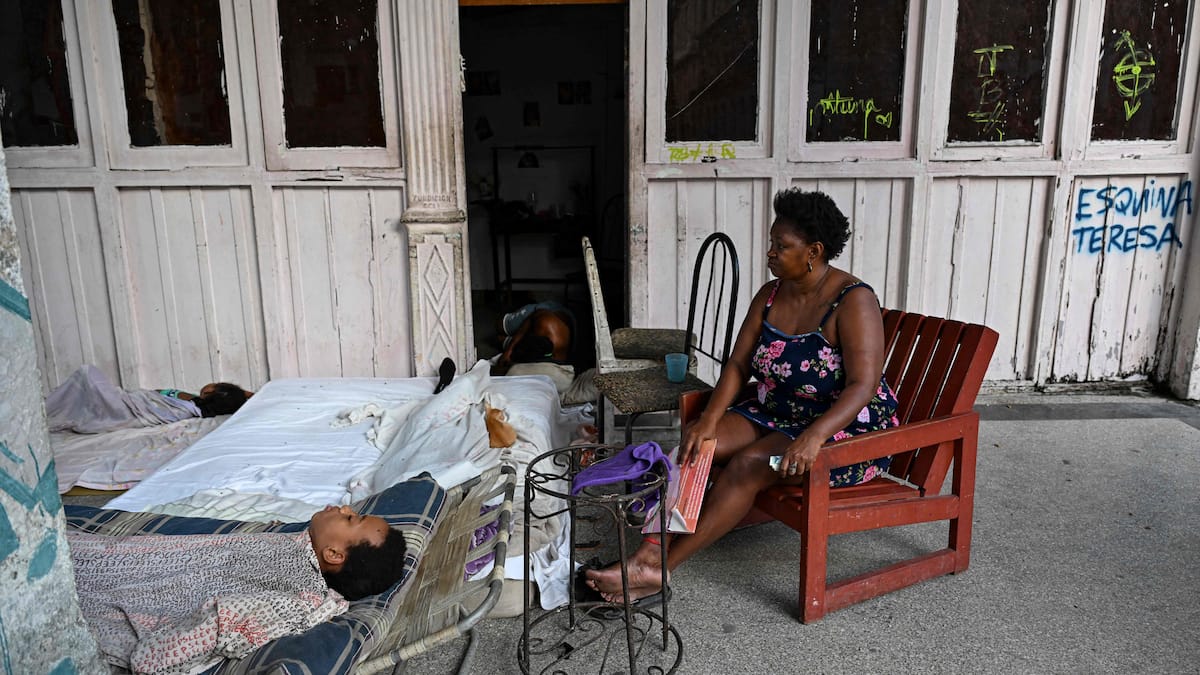
This situation causes incessant power cuts which now reach more than 30 hours in a row in Havana, and several days in the provinces, despite a vast solar park construction program launched two years ago.
“You have to adapt. We Cubans adapt to this. Unfortunately, that’s how it is. We adapt to good things and bad things,” philosophized Rebeca Ceballo, a 73-year-old retiree.
“Without pity”
Relations between the United States and Cuba have become significantly strained since the start of the year, particularly after the capture of Venezuelan President Nicolas Maduro, an ally of the Cuban government.
In addition to the oil blockade in force since January, Washington has imposed new sanctions against Cuban companies and leaders.
Donald Trump believes that the communist island, located 150 kilometers from the coast of Florida, constitutes “an extraordinary threat” to the national security of the United States. He warned several times that he could “take control”.
The two countries are in difficult talks.
On Tuesday, Cuban Foreign Minister Bruno Rodriguez denounced the “merciless” US blockade against the island, during a debate at the UN General Assembly that took place despite diplomatic pressure from the United States to prevent it.
The organization of this special debate, however, gathered less support (136 votes for, 9 against, 30 abstentions) than the usual annual votes against the American embargo against Cuba.
“The United States government is waging a multidimensional and unconventional war against Cuba that has lasted for almost seven decades and which has become even more cruel and merciless” with the blockade, declared Bruno Rodriguez, denouncing a “collective punishment” of the population.
“There is no American blockade. The only embargo in Cuba is the guillotine that the regime hangs over the heads of its people,” defended American Ambassador Mike Waltz from the podium.
Under pressure, the Cuban authorities adopted in mid-June a package of unprecedented measures in favor of the market economy, an upheaval for the economic model of the island since the adoption of communism almost 70 years ago.