
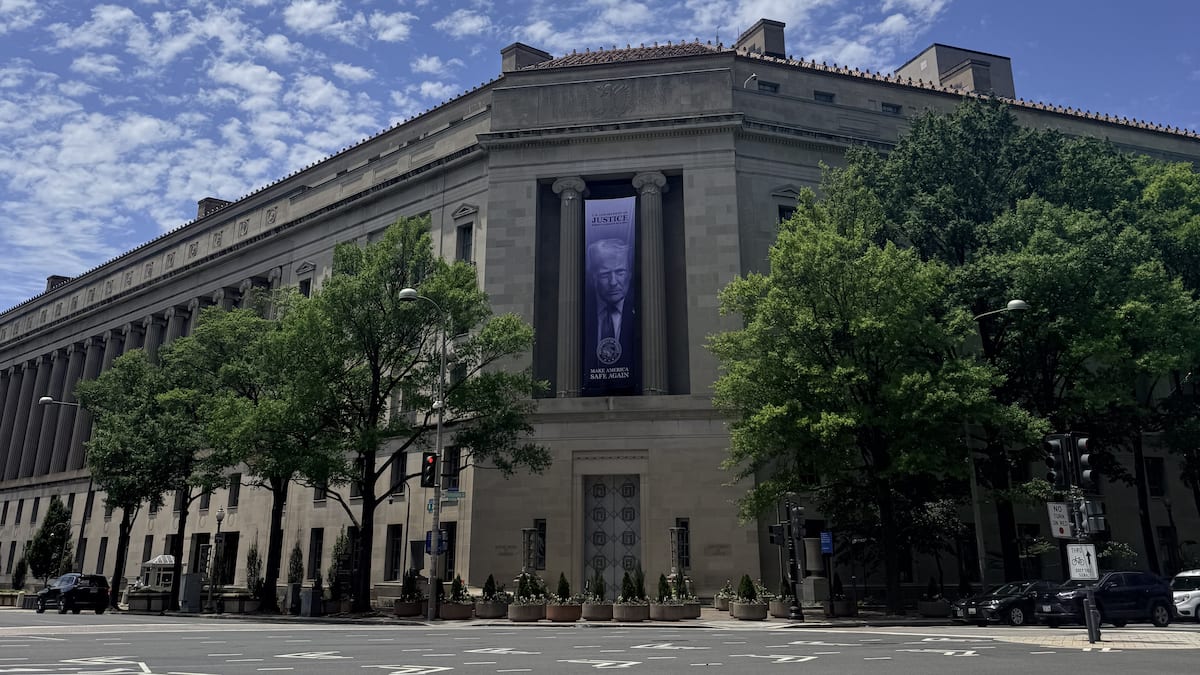

Washington is no longer the same. The White House has changed. The atmosphere is different. Donald Trump, even sitting in the Oval Office, continues to see himself as a builder, a “stable creative genius”, to paraphrase him. No matter what anyone says.
The “UFC Freedom 250” mixed martial arts gala on Sunday symbolizes, in itself, the president’s indifference to what people think of him. Already, the habit had established itself of describing his second term as a circus. The immense metal structure built in the southern gardens of the White House has effectively transformed the presidential residence into a carnival square.
The disfigurement of the complex had already been well underway with the demolition of its east wing to install a monumental ballroom, in defiance of criticism from architects and historians and the opinions of thousands of scandalized Washingtonians.
Vanity as a source of inspiration
He had the famous “Reflecting Pool” in front of the memorial to Abraham Lincoln repainted blue, without permission or a call for tenders. He persists in wanting to erect a huge triumphal arch on the path leading to Arlington Cemetery, despite opposition from veterans who denounce a lack of respect for fallen soldiers.
Long banners bearing his image have been installed on several federal buildings, including the headquarters of the Department of Justice. They are omnipresent in authoritarian countries, but no one can remember seeing anything similar in the American capital. And to hell with the independence of justice!
From gesture to word
It is often no longer detachment, but insensitivity. His “I love inflation” in the Oval Office this week rivaled his casual admission last month – “I don’t think about the financial situation of the American people.” I don’t think of anyone. I am thinking of not letting Iran acquire nuclear weapons. » – when asked about the difficulties many families face in the face of rising gas prices.
He persists in claiming that he lost the 2020 presidential election through fraud, despite investigations and verifications that prove him wrong. And too bad for the blatant appearance of favoritism towards his supporters: he continued to push the idea of creating a fund of almost 1.8 billion dollars – “Anti-Weaponization Fund” – in a total absence of transparency.
The question, in fact, may no longer be what Donald Trump thinks of Americans, experts or his detractors. The answer seems obvious: not much. It is now a matter of monitoring the extent to which a president convinced that he is always right can reshape institutions, symbols and even the landscape in his image. Seeing what Washington is becoming, we have the beginnings of an answer.
