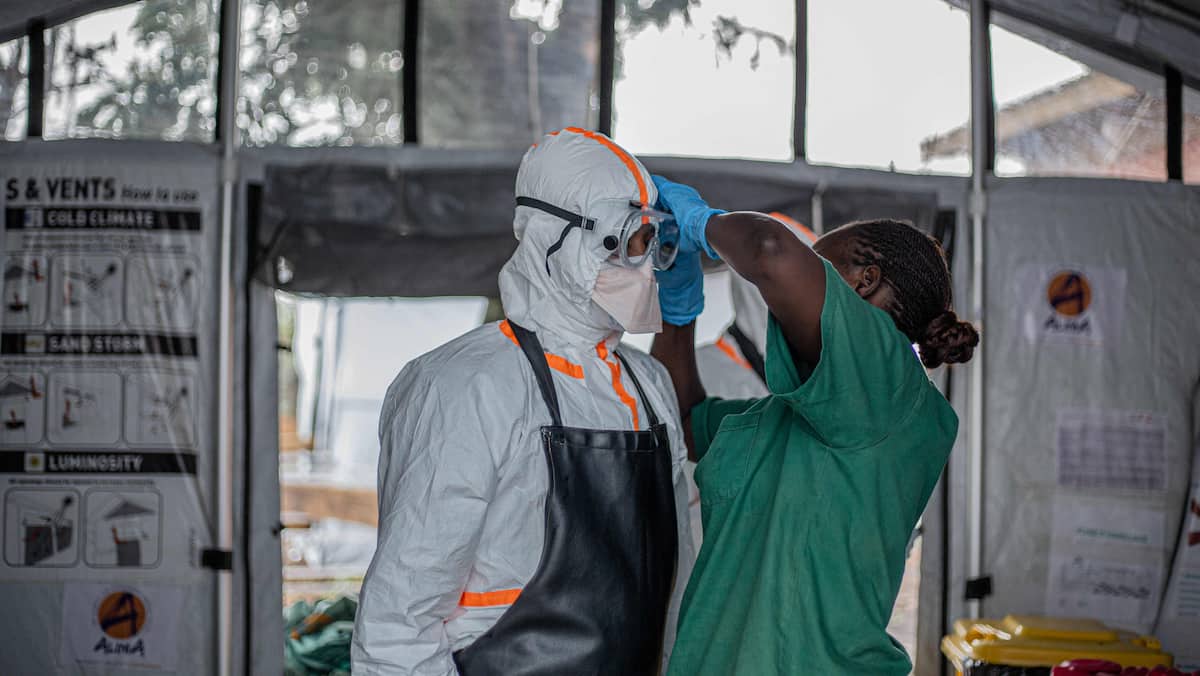

More than 2,000 cases of Ebola including 754 deaths have been recorded in the Democratic Republic of Congo (DRC) since the start of the epidemic, Congolese health authorities indicated on Wednesday, with the disease spreading at an “unprecedented rate” according to MSF.
• Also read: WHO announces first trial of antiviral against Ebola
• Also read: Ebola in the DRC: doctors at the epicenter of the epidemic threaten to strike
“In less than five weeks, the number of confirmed cases has tripled” while “the number of deaths has more than quintupled,” according to the NGO Doctors Without Borders (MSF).
The Bundibugyo epidemic, the virus variant spreading in the DRC, could be at least two to four times larger than official figures suggest, the World Health Organization (WHO) said on Tuesday.
There is currently no recognized vaccine or treatment for the Bundibugyo variant, but the first clinical trial to evaluate the effectiveness of an antiviral began on Tuesday, the WHO announced.
More than 2,000 cases have been confirmed in five provinces of the DRC, including 754 deaths, according to the latest report from Congolese health authorities published on Wednesday.
The epidemic is spreading at an “unprecedented pace and in new areas”, MSF alarmed in a press release released on Wednesday, pleading for “an urgent strengthening of the medical response”.
“The outbreak has already exceeded half the number of cases recorded during the 2018-2020 Ebola outbreak in the DRC, which lasted almost two years,” the organization added.
On Tuesday, WHO emergency operations director Chikwe Ihekweazu said 80% of new cases were not on known contact lists and came from “unknown chains of transmission.”
He expressed alarm that many of the newly reported cases involved people who died before they could reach a health facility.
The current epidemic is “the one which is experiencing the most rapid progression in a single month of all the Ebola epidemics that we have managed”, he warned.
The clinical trial started on Tuesday, and called EBO-PEP, aims to evaluate the effectiveness of post-exposure prophylaxis (PEP) with the antiviral obeldesivir on patients who have been in contact with confirmed cases of Bundibugyo.
The experimental drug, administered orally and developed by the American pharmaceutical laboratory Gilead Sciences, has shown its effectiveness in preclinical models against viruses belonging to the large filovirus family, responsible for hemorrhagic fevers.
Clinical trials are carried out when a promising drug is tested on humans.
The epidemic was declared on May 15 in the DRC after several deaths in Ituri, a mineral-rich northeastern province where armed groups regularly commit massacres.
Cases of Ebola, which is transmitted through close contact and bodily fluids, have been detected in five DRC provinces as well as neighboring Uganda. But more than 90% of cases continue to be detected in Ituri.