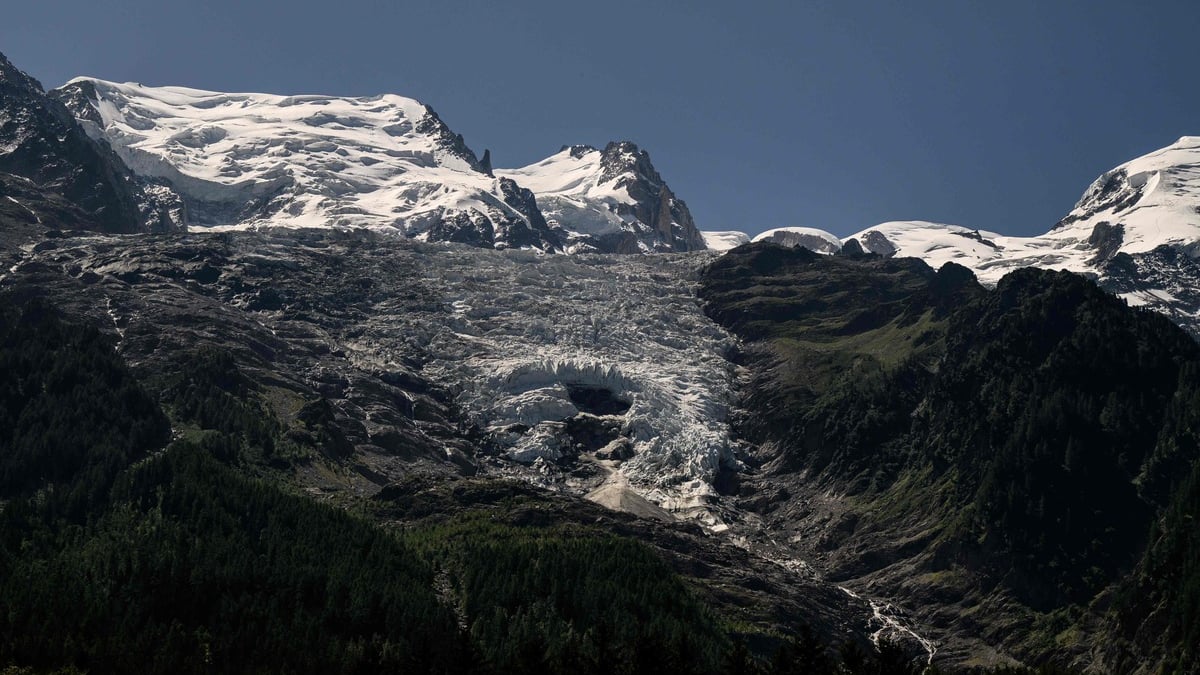

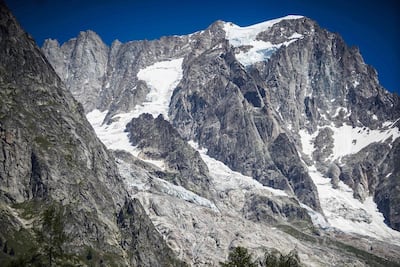
Italian mountain guides have suspended the ascent of Mont Blanc by the normal route on the Italian side, due to recent heat waves which are weakening the glacier leading to the highest peak in Europe, an official told AFP on Wednesday.
• Also read: The weather calms down under variable skies, the heat wave fades
• Also read: Record heat wave stretches across the United States
• Also read: A sudden weather phenomenon sows panic and causes a sudden loss of 12 degrees on a French beach
“The conditions quickly deteriorated with the heat of June and no longer allowed us to take clients: the glacier is very cracked and it is difficult to find the right route,” Alex Campedelli, president of the Courmayeur Guides Society (north-west), an alpine resort located at the foot of Mont Blanc, told AFP.
Photo AFP
“We have decided since last week to no longer offer this ascent,” he said, stressing however that no banning measures have been taken by the authorities and that alternative routes remain viable on the Italian side of Mont-Blanc.
Abnormally high temperatures have been recorded in recent weeks in the Alpine peaks, which accelerates the melting of glaciers and increases the risk of landslides.
The ascents continue normally on the French side of Mont-Blanc, however, Ricardo Mora, vice-president of the Compagnie des guides in Saint-Gervais-les-Bains (Haute-Savoie), told AFP.

AFP
However, “we see that the temperature, at a given moment, will perhaps force us to make the same decision as a few years ago,” he qualified, referring to 2022.
AFP
That year, the Chamonix and Saint-Gervais Guide Companies announced in mid-July the temporary suspension of ascents of Mont Blanc by the normal route due to rockfalls.
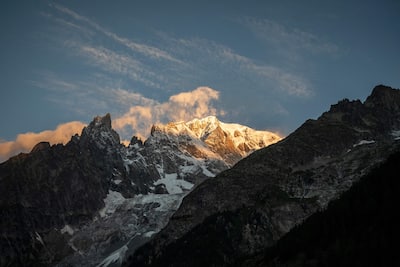
In Switzerland, the Zermatt guides have for this reason recommended since last Thursday to temporarily abandon the ascent of Mount Matterhorn via the Hörnli ridge.
AFP
“On the Mont Blanc and Matterhorn routes, you simply have to have the humility to give up temporarily,” Pierre Mathey, secretary general of the Swiss Association of Mountain Guides (ASGM), told AFP.
“This heatwave is prolonged and we have significant warming of the ground, the melting of snow and ice and the thawing of permafrost”, which “causes more significant collapses or landslides”, he explained.
The head of the glacier monitoring service in Switzerland (Glamos) had already warned at the end of June in an interview with AFP that a “very significant loss of ice” was to be feared in the Alps this year due to heat waves.