
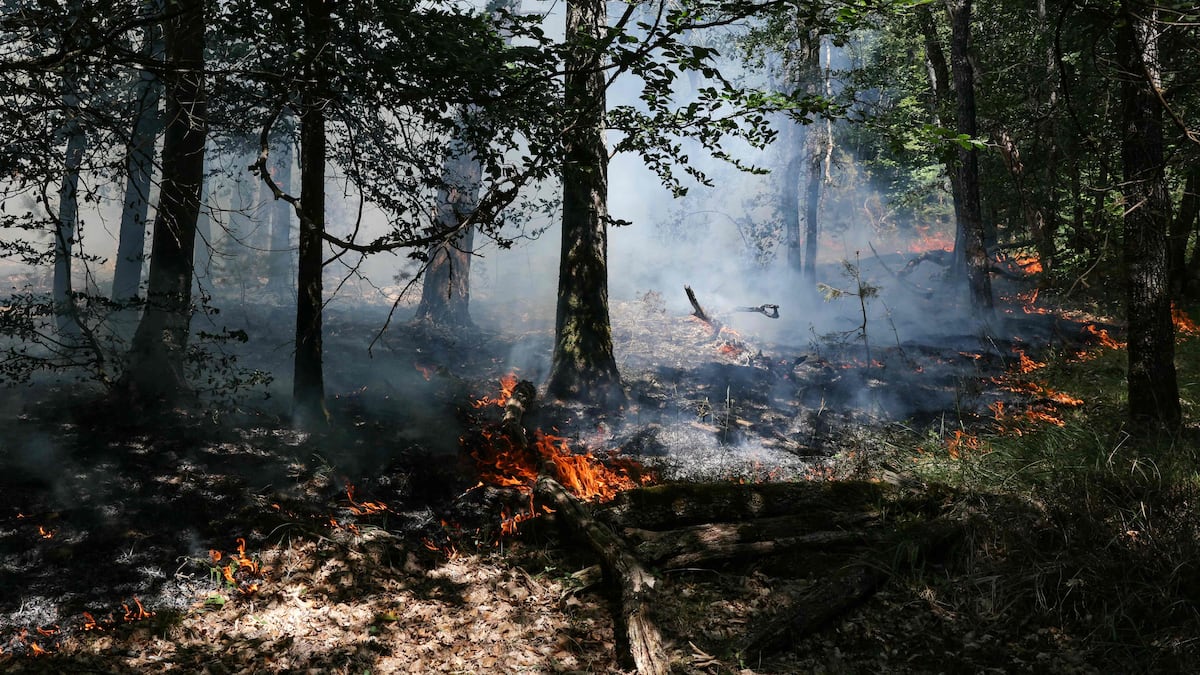

A rocky chaos, oceanic sands, a fairy pond: a former hunting domain of the kings of France, the Fontainebleau forest is a vast massif to the south-east of Paris, a green lung of exceptional biodiversity.
• Also read: PICTURES | Major fire in the emblematic Fontainebleau forest: two Canadair planes deployed in France
• Also read: France: the Fontainebleau forest, near Paris, in the grip of a fire of “exceptional magnitude”
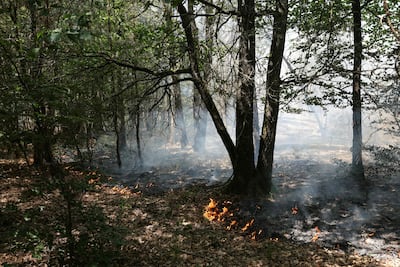
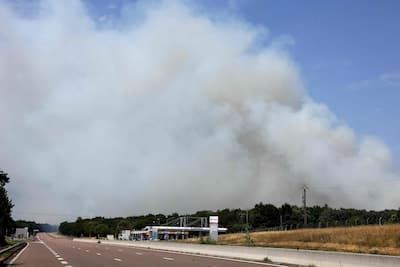
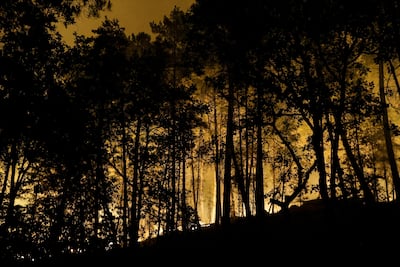
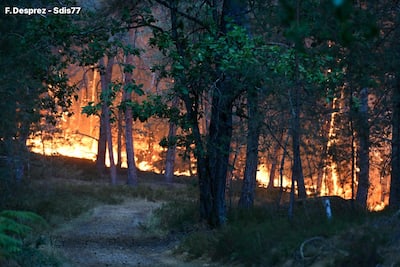
Monday morning, an extraordinary fire had covered some 800 hectares of the 25,000 hectares of the massif – including 23,000 ha of public forest, managed by the National Forestry Office (ONF).
This is the worst fire since those of 1921 (762 hectares) and 1945 (825 ha), according to archives dating back to 1863, notes Sophie David, head of the environment and public reception department at the ONF Ile-de-France-Est and archaeologist specializing in Fontainebleau.
AFP
The second largest national forest after Orléans, Fontainebleau is the busiest in France, with “between 15 and 18 million visits per year”, almost double the number of visitors to the Louvre museum: the public is largely from the Ile-de-France region, but people also come from abroad (30% of visitors), “especially for the climbing routes”, according to the ONF.
Barbizon School
“The particularity of the Fontainebleau massif is the diversity of its landscapes and the richness of its biodiversity,” emphasizes Sophie David. There are oak and beech groves as well as conifers, open moors, fossil dunes, ponds and wetlands.
AFP
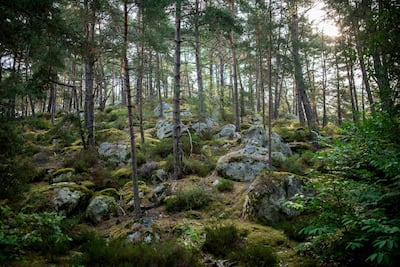
This forest was first an ocean, 30 million years ago: as it retreated, the sea left behind sand which, upon solidifying, formed sandstone rocks: these “chaos” emerging from the ground are today a delight for climbers.
The archaeologist describes a place frequented since prehistoric times – “more than 2000 engraved shelters” have been found. A widely cultivated area in Antiquity, the area became a royal domain around the year 1000 under Robert II “the Pious”: this so-called Beer forest – derived from heather – would become a sumptuous hunting area.
AFP
One of its particularities is “the link between the forest and the Château de Fontainebleau”: the drilled forest paths and the star-shaped crossroads designed for hunting “are still today those which are used by firefighters to fight against fire”, relates Sophie David.
Quite widely grazed, 200 years ago, the massif was “a third of the current surface”. “In the 19th century, trees were planted to fill the gaps: we then chose pines, trees with shallow roots, not demanding”, capable of growing in the sandy soil.
The face of this new, more open forest will be illustrated by the painters of the Barbizon impressionist school.
AFP
The invention of the paint tube combined with the recreational aspirations of the bourgeoisie made the forest walk a success: “the train arrived in 1849 and the first marked trails in the world were created,” recalls Sophie David. Rosa Bonheur paints an enchanting “fairy pond”.
AI detection
The variety of landscapes promotes “exceptional biodiversity”, with more than 6,500 known animal species, ranging from rare insects (Stag beetle, greater Capricorn), to birds (warbler, green woodpecker or tawny owl) and mammals (pine marten, European hare, deer).
AFP
Fire is a permanent danger there, already mentioned in the 13th century. At the beginning of the 20th century, “surveillance pylons” were installed to keep watch, which made it possible to reduce the areas burned (up to 150 ha/year previously).
More recently, six water tanks – of 10,000 liters each – were installed in the forest, to intervene as close as possible to fires: around thirty per year, most often linked to a poorly extinguished cigarette butt or a prohibited bivouac.
For two years, the firefighters have been testing a surveillance system reinforced by AI, which makes it possible to detect and locate smoke more quickly: an advantage in addition to the surveillance of the massif by the ONF – which patrols every weekend from April to October.
Classified as a “biosphere reserve” by UNESCO (1998), Fontainebleau is also classified for its landscape value and a “Natura 2000 site”.
It has 2,500 hectares of biological reserves, including 1,000 in complete reserves, without any human intervention: it is in particular one of these reserves which is affected by the current fire.