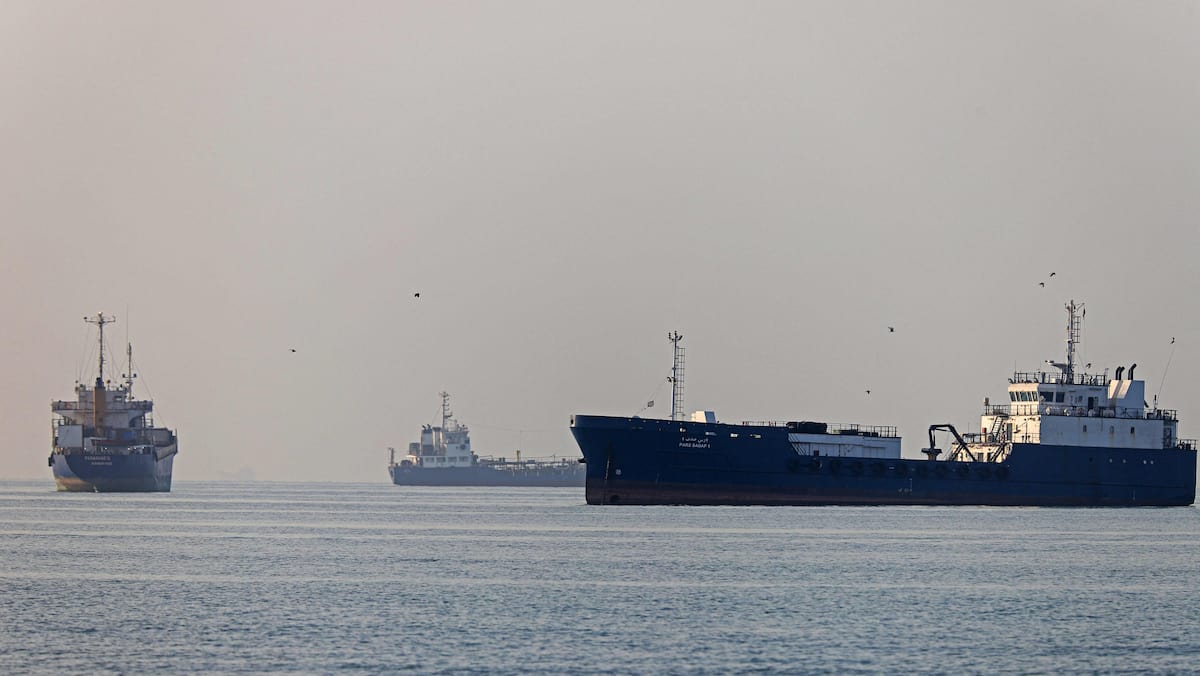

Donald Trump announced on Monday the return of the naval blockade of Iranian ports in the Strait of Hormuz sector, at the heart of strikes on an unprecedented scale since the April ceasefire in this war which continues to shake the world economy.
• Also read: US military says ships are circulating in the Strait of Hormuz
• Also read: War in the Middle East: Iran and the United States continue their mutual attacks
• Also read: War in Iran: Here are 3 things likely to happen in the coming days, according to an analyst
“The United States will henceforth be known as the ‘GUARDIANS OF THE STRAIT OF HOMUZ’,” the American president launched on his Truth Social network after a series of strikes in the night aimed at preventing Iran from attacking the ships, according to the American command for the Middle East (Centcom).
And to announce the re-establishment of the “BLOCUS OF IRAN” – so named because it only prevents ships or clients from Iran from entering or leaving”.
And just as Tehran wants to introduce service fees, it wants to collect “remuneration corresponding to 20% of the value of cargo” transiting by sea, even though it is subject to international law supposed to guarantee unhindered freedom of navigation.
Iran, for its part, assures that it will “under no circumstances allow” Washington to interfere in the management of the strait, of which the Islamic Republic took control at the start of the war.
The country holds the American enemy responsible for the “return of insecurity” in the area. And his powerful Revolutionary Guards accuse him of endangering the world’s oil supply.
A crucial subject after months of soaring prices linked to the paralysis of this strait through which a fifth of the world’s crude transited before the war. On Monday, a barrel of Brent from the North Sea, an international benchmark, jumped more than 3.5% to nearly $79.
“With the breakdown of negotiations and the end of the truce, the war in the Middle East has now returned with full force” on the markets, analyzes Andreas Lipkow, for CMC Markets.
• Also watch this video podcast taken from Alexandre Dubé’s show, broadcast on QUB platforms and simultaneously on 99.5 FM Montréal:
“In crisis”
After almost 40 days of bombing in a conflict triggered by Israeli-American strikes on February 28, a ceasefire came into force at the beginning of April, before being ratified on June 17 by a memorandum of understanding.
But since attacks on Tuesday against ships trying to cross the strait, clashes have resumed with an intensity not seen in weeks, leading Donald Trump to say several times that the ceasefire was “over”.
And shattering the memorandum of understanding.
“There is no doubt that this document is in crisis. But Iran has never been the first to violate its commitments,” criticized diplomatic spokesperson Esmaïl Baghaï during a press conference in Tehran attended by AFP.
Consultations with the mediators Qatar, Pakistan and Oman are continuing in order to “prevent an escalation”, he nevertheless assured.
“Whether the MoU is dead or alive is irrelevant, given the multiple interpretations to which it has been subject. The two parties must reach clearer terms,” analyzes Bader Al-Saif, from Kuwait University, insisting on “the crucial role of mediators and the international community.”
The document provided for a reopening of the strait, with Tehran only authorizing a single navigation corridor, along its coasts, and threatening ships bypassing this route.
“This strategic passage is more important than dozens of atomic bombs, and the Islamic Republic of Iran will protect it,” warned the military advisor to the Iranian Supreme Leader, Mohsen Rezai, quoted by the ISNA agency.
23 dead since Wednesday
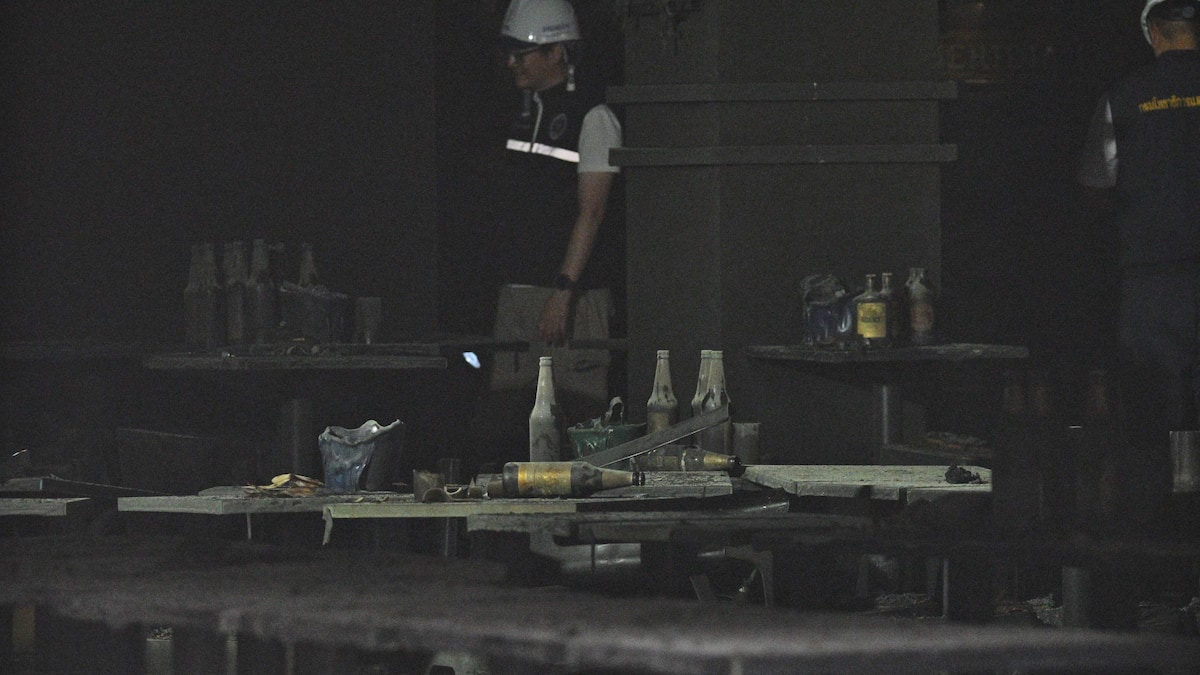
The latest US strikes targeted “Iranian air defense systems, coastal radars, missile and drone capabilities, as well as small boats,” Centcom reported on X.
According to Iranian state media, the bombings affected large areas of the west and south of the country, notably the island of Qeshm and Bandar Abbas, near Hormuz, but also the Khuzestan province bordering Iraq where two people were killed.
The Mehr agency reported new explosions near the strait on Monday morning.
In total, 23 people have been killed since Wednesday, according to an AFP count based on Iranian media and official sources.
In retaliation, the powerful Revolutionary Guards said they bombed US facilities in Oman, Bahrain, Kuwait and Jordan.
Another incident, in Yemen: the government, supported by Saudi Arabia, said it had targeted the Sanaa airport, controlled by pro-Iranian Houthi rebels, to prevent the landing of an Iranian plane – with on board a delegation returning from the funeral of supreme leader Ali Khamenei.