
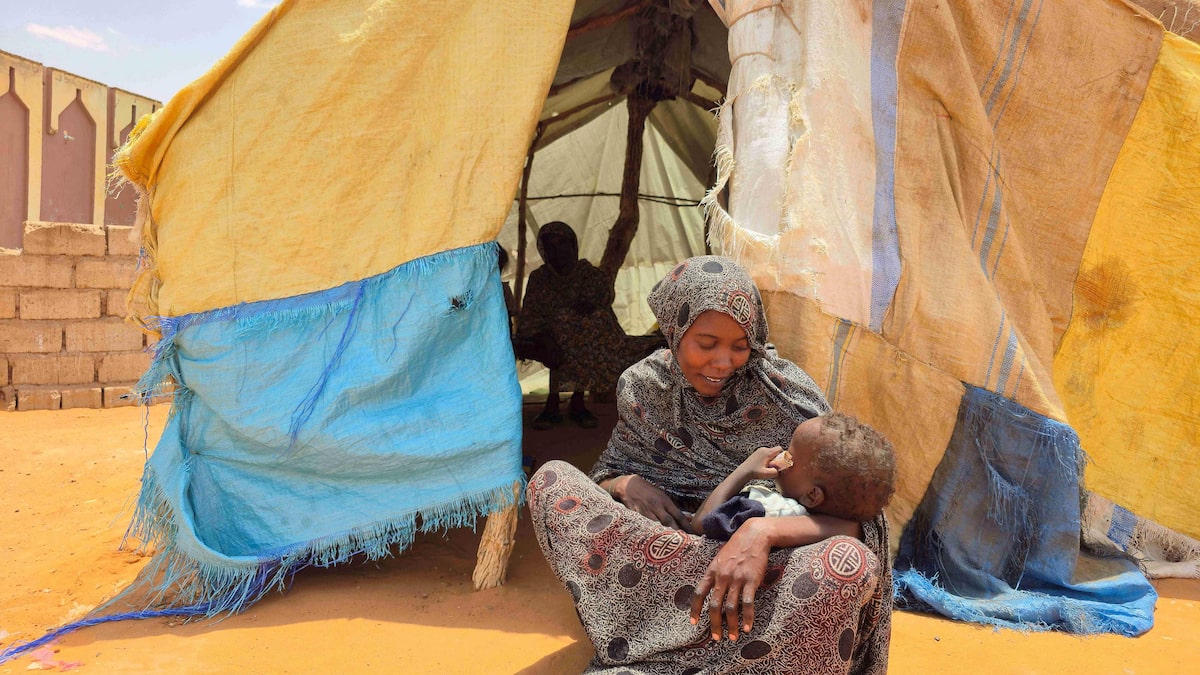

The High Commissioner for Human Rights Volker Türk launched a “red alert” on Friday in the face of the “catastrophe” underway in El-Obeid, a large city in Sudan besieged by paramilitaries, with the UN fearing the displacement of hundreds of thousands of people.
El-Obeid, in the Kordofan region, has been the subject of a siege for several months by the paramilitaries of the Rapid Support Forces (FSR), at war against the regular army since April 2023.
“The signs from El-Obeid are clear and unequivocal: a new human rights catastrophe is unfolding in Sudan, this time in the capital of the strategic state of North Kordofan,” Türk said at the opening of an urgent debate on Sudan at the UN Human Rights Council in Geneva.
This debate was requested from the presidency of the Council, in session until next week, by the United Kingdom with the support of Germany, Ireland, the Netherlands and Norway who wish to have a draft resolution adopted calling for “a humanitarian truce leading to an immediate ceasefire”.
The text, which also “strongly condemns the escalation of violence” in El-Obeid by the RSF, should be examined on Monday.
“The increase in drone strikes has killed civilians and destroyed civilian infrastructure. “Critical supply routes in the region have been affected, as well as gas stations and the electricity grid,” British representative Eleanor Sanders said during the debates.
For several days, the UN, NGOs and various governments have been concerned about a possible imminent attack in El-Obeid similar to that which led to the capture of El-Facher last year, a town in Darfur where the RSF are accused of having committed multiple abuses.
“This is a red alert that must reach heads of state and government around the world. Their phones should be overheating in the days and weeks to come, with ideas on how to prevent atrocities in El-Obeid and elsewhere in Kordofan, where the same methods are at work,” said Mr. Türk.
He also called for tackling the “economics of war”, stressing that “domestic and foreign actors profit from the carnage”.
“Flee the city”
The city of half a million inhabitants hosts around 100,000 refugees, displaced by violence elsewhere in the country.
After breaking a prolonged siege in February last year, the army struggled to prevent paramilitaries from re-imposing a blockade through repeated drone strikes against the city, its infrastructure and the main exit route.
“If we don’t act now to stop what is happening in El-Obeid, we will see another El-Facher, we will see a new displacement of perhaps 500,000 people or more,” warned Mohamed Refaat, head of mission of the International Organization for Migration (IOM) in Sudan.
According to Mr. Türk, some people sell their goods to “escape the city”, but the cost of transport and attacks on the roads prevent many from leaving.
People who remain in El-Obeid risk, according to him, being arbitrarily detained, while those who have fled areas controlled by the RSF and their allies are often accused of collaboration, “all in a context of increasing hate speech”.
The Office documented 15 drone strikes on El-Obeid and surrounding areas between June 6 and 28, which killed at least 45 civilians and injured 41, but estimates that the actual number of civilian casualties is likely higher.
“Across the Kordofan region, drones launched by both sides have repeatedly struck markets, schools, gas stations, water infrastructure and civilian vehicles,” denounced Mr. Türk.
The civil war which has pitted the Sudanese army against the paramilitaries of the Rapid Support Forces (FSR) since April 2023 has, according to the UN, caused tens of thousands of deaths and displaced more than 12 million people, including nearly a million in Chad.