
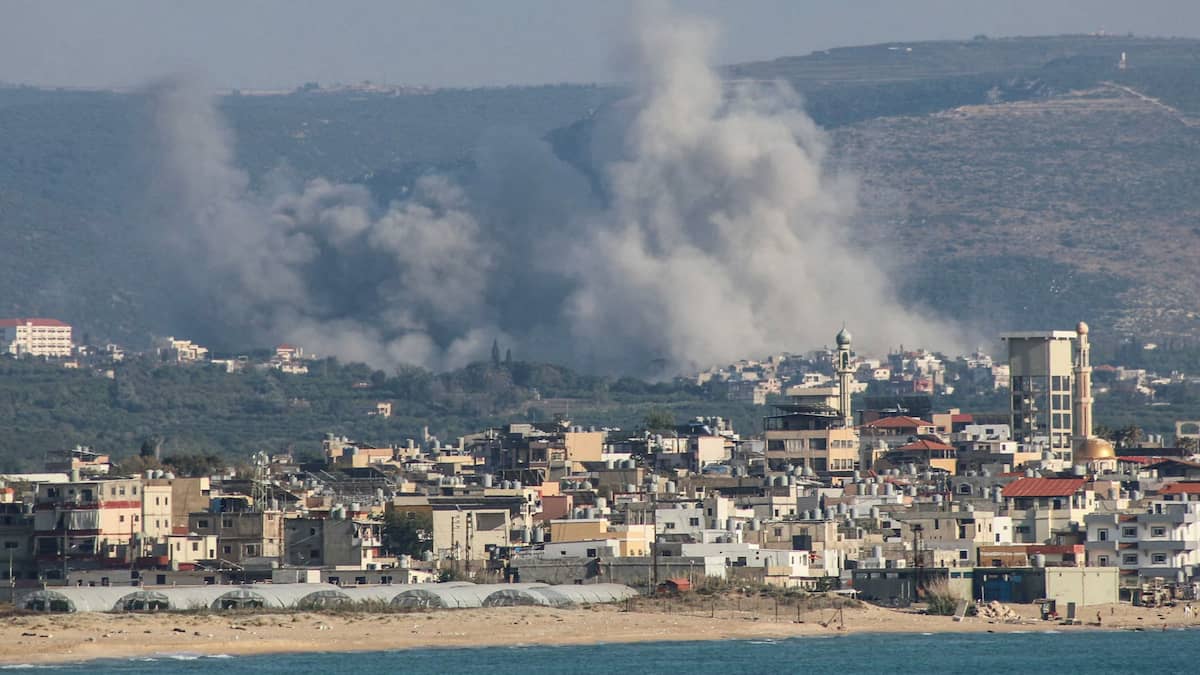

The United States and Iran reached a peace agreement on all fronts, including in Lebanon, to end the war in the Middle East that began on February 28 and allow the reopening of the Strait of Hormuz.
• Also read: The United States and Iran will sign a peace agreement in Switzerland on June 19
• Also read: Iran and United States announce protocol without resolving their disagreements
Here are the main global reactions:
United Nations
“This is a crucial step towards a peaceful resolution of the conflict,” UN Secretary General Antonio Guterres said in a statement, thanking several countries for their role as mediator, including Pakistan.
European Union
The President of the Council of the European Union (EU), Antonio Costa, on Monday welcomed the agreement announced between the United States and Iran to end the war in the Middle East, adding that Europeans were ready to contribute to a “lasting peace”.
“I welcome the end of this costly war and the full restoration of freedom of navigation in the Strait of Hormuz,” he reacted on X.
France
French President Emmanuel Macron called on Monday for the establishment of a “robust and lasting ceasefire” in Lebanon, while an Israeli strike on the southern suburbs of Beirut left three more dead on Sunday.
The French president also said that the international maritime mission set up by France and the United Kingdom was “ready to support” the reopening of the Strait of Hormuz after the agreement reached between the United States and Iran.
In a video posted Sunday evening on Instagram upon his arrival in Evian, where a G7 summit begins on Monday, he declared that “the objective will be to see the consequences of this agreement, the support for Lebanon, the reopening of Hormuz over time, and obviously the conclusion of an agreement on nuclear and ballistics in Iran”.
“We will also look at ways and means of diversifying the energy routes that leave the region to get out of our dependence” and therefore “the consequences of the crisis in the Middle East on our economies”, he also explained.
France
“The objective will be to see the consequences of this agreement, the support for Lebanon, the reopening of Hormuz over time, and obviously the conclusion of an agreement on nuclear and ballistics in Iran,” said French President Emmanuel Macron in a video posted on Instagram upon his arrival in Evian, on the shores of Lake Geneva, where a G7 summit begins on Monday.
“We will also look at ways and means of diversifying the energy routes that leave the region to get out of our dependence” and therefore “the consequences of the crisis in the Middle East on our economies,” he explained.
United Kingdom
“I want to congratulate President Trump and the mediators from Pakistan, Qatar and elsewhere who contributed to this breakthrough. We have long called for de-escalation, and this is precisely the progress we hoped to see happen,” responded British Prime Minister Keir Starmer in a statement.
“The focus now must be on fully implementing the MoU to ensure the reopening of the Strait and ensuring that it remains fully and permanently open, as well as finalizing the details of the nuclear deal,” he added.
Türkiye
Turkish President Recep Tayyip Erdogan stressed in a message posted on the social network
Qatar
Qatar’s Ministry of Foreign Affairs expressed in a statement its “full support for all efforts and initiatives aimed at strengthening regional security and stability.”
Japan
Japanese Prime Minister Sanae Takaichi said she hoped that “free movement and safety of navigation in the Strait of Hormuz will be effectively guaranteed, and that a final agreement on the Iranian nuclear issue and other issues will be reached as soon as possible.”
Australia
Australia warned that “continued restraint and constructive engagement” would be essential to ensure lasting peace.
“Iran must address long-standing concerns about its nuclear program and the threat it poses to international security,” Prime Minister Anthony Albanese and Foreign Minister Penny Wong said in a joint statement.
New Zealand
New Zealand Prime Minister Christopher Luxon welcomed the reopening of the Strait of Hormuz on Monday and said “it will help restore stable trade routes, ensure fuel supplies and keep our economy moving.”


